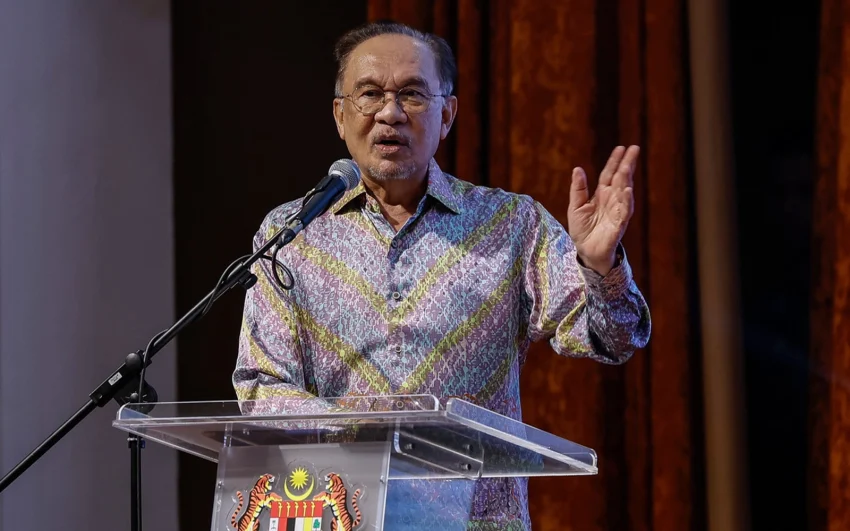
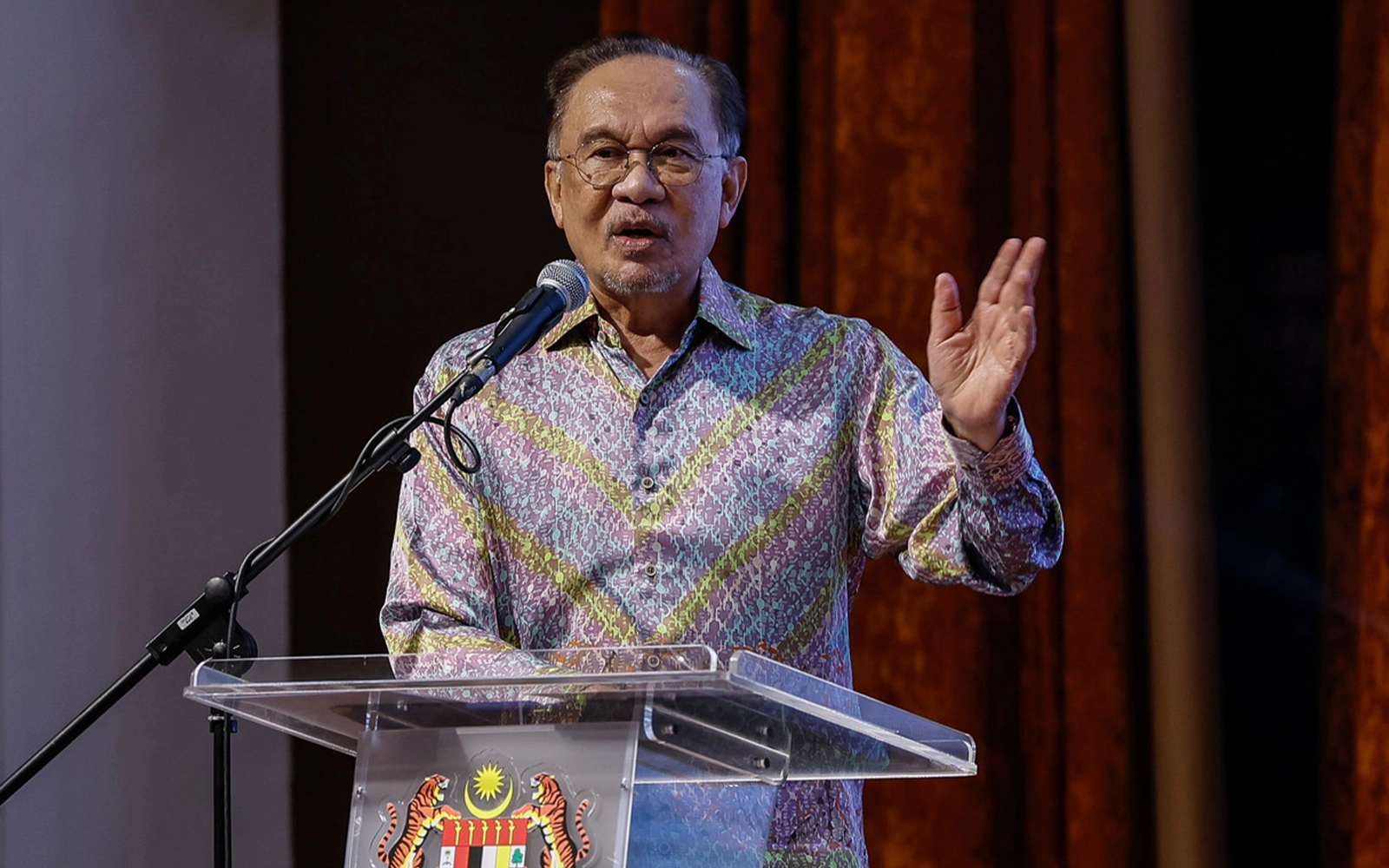
SHAH ALAM: Prime Minister Anwar Ibrahim has called on state governments to comply with the federal government’s decision on illegal houses of worship.
Anwar said he would consult the state governments, including the opposition-led administrations, on the matter now that he had made a “firm” decision.
“Let us set aside those political differences,” he was quoted as saying by New Straits Times.
Anwar admitted that the issue of illegal houses of worship was a complicated one and that it took over two years before the policy was finalised.
“Certainly, compromise has its strengths and benefits.
“(Compromise) is a good term, but not one that should undermine the very foundations and strength of the nation,” he said.
Yesterday, Anwar said the federal government had empowered local councils to act on any house of worship that was intentionally built in breach of existing laws.
He said the federal government would no longer permit the construction of any house of worship that did not comply with regulatory requirements.
The issue had gained traction in recent weeks, with several politicians from the Hindu community calling for restraint.
A rally against alleged illegal temples was set to take place last Saturday, but fizzled out after the arrest of several individuals who had planned to proceed with the protest despite police orders to cancel it.
Separately, Bernama reported Malaysia Hindu Sangam expressing its readiness to work with the government, local authorities and all stakeholders to ensure Hindu houses of worship are preserved, respected and managed.
Its president, T Ganesan, said it had submitted a memorandum to the Prime Minister’s Office proposing the establishment of a regulatory body for Hindu temples under the PMO, with joint oversight by Hindu NGOs.
He said the proposal aims to provide a structured long-term solution, including a regularisation mechanism for temples facing land ownership issues in line with the law, social justice, and the historical realities of temple establishments in Malaysia.