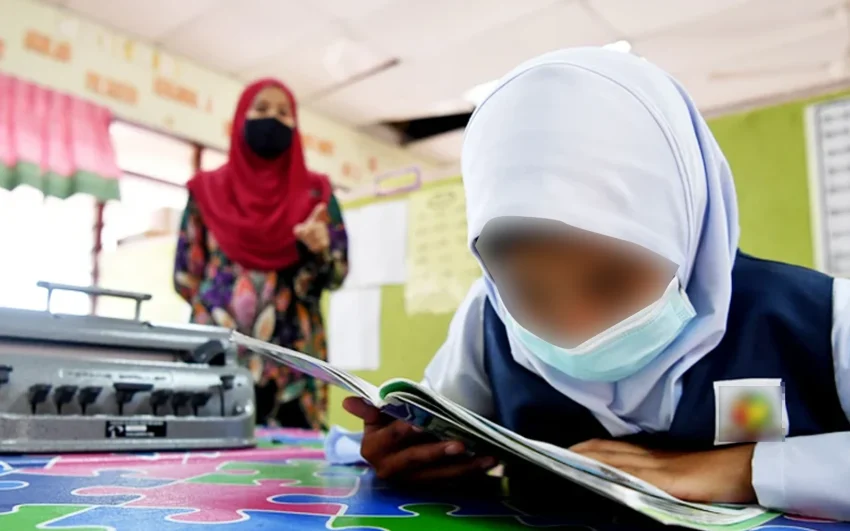
PETALING JAYA: The National Union of the Teaching Profession (NUTP) has urged the government to establish specialised schools to address overcrowded classrooms and extreme emotional stress faced by teachers under the Integrated Special Education Programme.
NUTP secretary-general Fouzi Singon suggested that the initiative be included in the 2026–2035 National Education Plan, which emphasises special education under its fourth strategic pillar, focused on strengthening infrastructure and learning support.
He stressed the urgent need for such measures, saying the implementation of the zero-reject policy was beginning to disrupt teaching and learning sessions.
He said some teachers now faced major challenges as certain parents adopted a “hands-off” approach, leaving the full responsibility of caring for their children to the school, even when they were aware that their children fell into severe categories and frequently threw tantrums.
“There have been cases where parents blame teachers for separating their child from other students.
“It is high time the government established several specialised schools for these children, located outside regular school zones, to address issues of student overflow and classroom overcrowding at certain schools,” he told FMT.
Nur Arif Jasmin, who won the “Ikon Anak Istimewa Selangor” award, said that the zero-reject policy, implemented in 2019, appeared to “discriminate” against educators despite its goal of preventing discrimination against children with special needs.
He said some teachers were forced to manage 10 to 15 students with varying disabilities including autism, attention deficit hyperactivity disorder, and learning difficulties in a single classroom.
He also suggested expanding budget-friendly intervention centres to assist students who were still aggressive or had not mastered basic self-management skills.
Meanwhile, education expert Hasnah Toran said that while the zero-reject policy provided relief to the disabled community, it would continue to create issues in schools if not accompanied by significant support measures.
She said the current infrastructure and human resources for early intervention had yet to be fully developed, resulting in many students entering Year 1 without basic preparation.
“We cannot deny that Year 1 teachers face immense challenges when receiving special-needs children who have not undergone early intervention, compounded by parents who are ‘clueless’.
“When parents are equipped with the skills to educate special-needs children effectively, these children enter school better prepared,” said the Universiti Kebangsaan Malaysia lecturer.
Hasnah proposed that the government establish a 10-year National Early Intervention Plan to ensure that every special-needs child receives the right support.
“For example, in the US, the Individuals with Disabilities Education Act mandates that the government provide intervention services within 30 days of diagnosis,” she said.