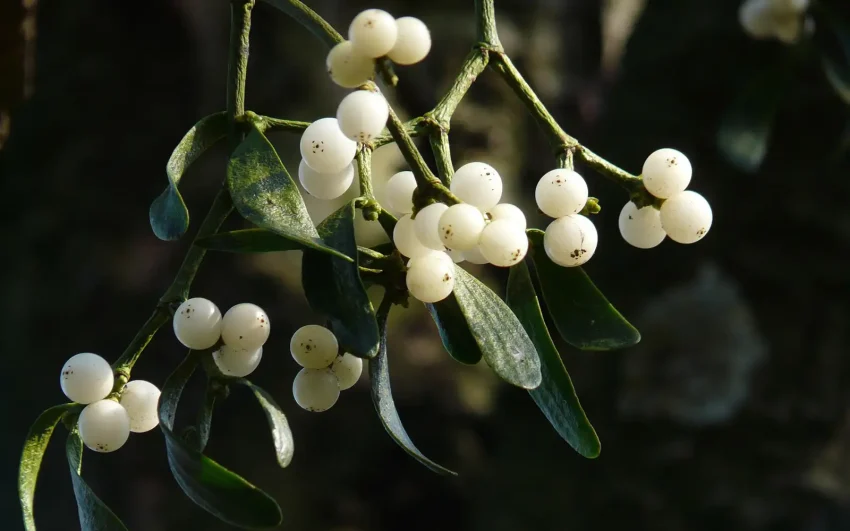
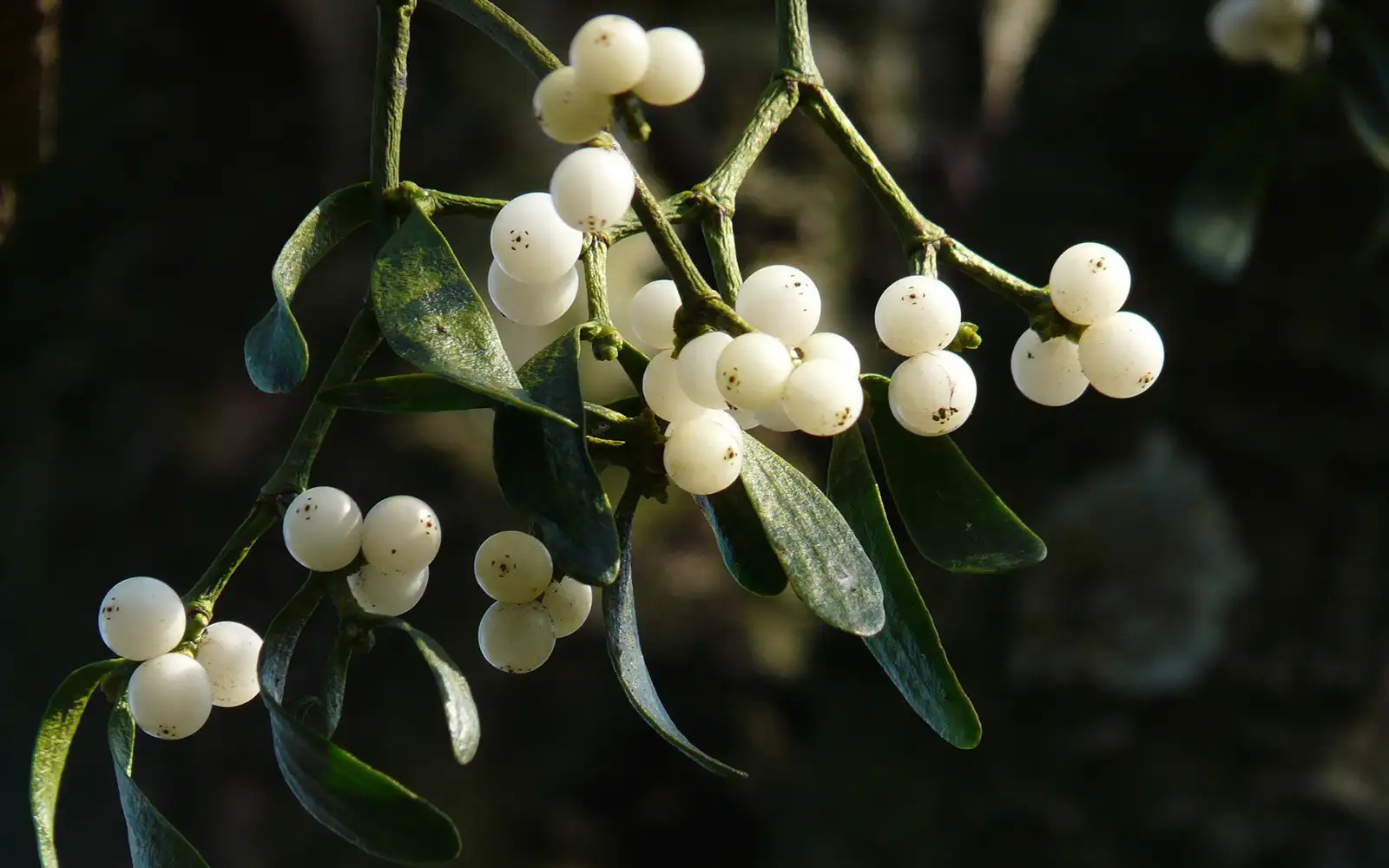
Come December, it slips quietly into homes, parties and festive films – a sprig of mistletoe hung in a doorway, inviting a playful, stolen kiss.
But behind its sweet and light-hearted charm lies a far older story, steeped in myth and mystery.
What’s mistletoe?
Mistletoe is a plant that grows by attaching itself to trees such as apples and poplar. Instead of rooting in the ground, it absorbs water and nutrients from its host tree through a structure called the haustorium.
Its small white berries and waxy green leaves make it stand out, especially in winter, when surrounding branches are bare.
Perhaps, part of mistletoe’s allure lies in its strangeness. Neither fully rooted nor entirely free-growing, it exists in between, surviving when other plants lie dormant.
That sense of rarity and resilience may be what made it feel magical in the depths of winter.
Traditional and mythological origins
In Norse mythology, it plays a central role in the story of Baldur, the god of light. According to legend, Baldur was invincible to all threats – except mistletoes.
The trickster god Loki discovered this weakness and used it to kill Baldur, plunging the world into grief. When Baldur was later restored to life, the mistletoe came to symbolise love and peace.
To the Celtic druids, mistletoes – especially when found growing on oak trees – were sacred.
Oaks were revered as symbols of strength and wisdom, and mistletoes growing upon them were seen as a divine gift. Mistletoes were also believed to bring good fortune and restore fertility.
The druids carefully harvested mistletoes with golden sickles, catching them in a cloth so they never touched the ground. Fun fact: despite its long history as a symbol of healing and fertility, mistletoes are actually mildly toxic if ingested!

The origin of kissing under the mistletoe
The romantic tradition of kissing under mistletoes is said to have emerged in England during the 18th century.
The earliest known published reference appears in an 18th century song, in which three men “kiss beneath the mistletoe” the lips of a “girl not turn’d of twenty”.
According to custom, anyone standing beneath it could not refuse a kiss as turning it down was thought to bring bad luck. With each kiss, a berry was removed – and once the berries were gone, the kissing privileges ended.
While early customs left little room to refuse a kiss, modern celebrations have reshaped the tradition.
Now, a mistletoe kiss is understood as an invitation rather than an obligation – a moment to be shared only if both parties are willing.
Today, mistletoes continue to appear in festive films and holiday settings as a symbol of romance: a small sprig that gently nudges people closer during the most nostalgic season of the year.


**mitolyn official**
Mitolyn is a carefully developed, plant-based formula created to help support metabolic efficiency and encourage healthy, lasting weight management.