
GOMBAK: Modern graffiti may have begun on the streets of 1960s New York, but it has travelled far from its rebellious roots to become a global art movement.
Malaysia is no exception. Graffiti and vibrant murals here are increasingly used to tell stories and spark conversation.
One graffiti artist, who goes by the name Gadang One, has been bringing colour and character to streets across Malaysia for almost 19 years.
But his works aren’t just pretty to look at, in fact each one is a way for him to honour his heritage.
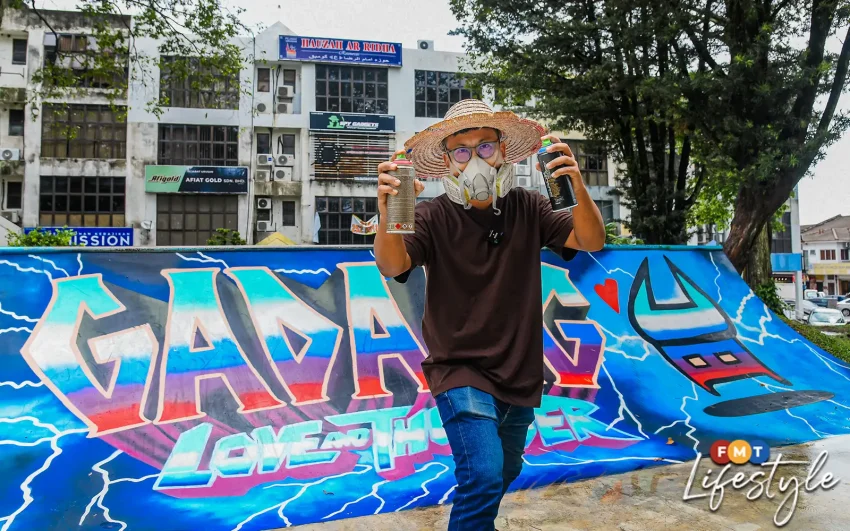
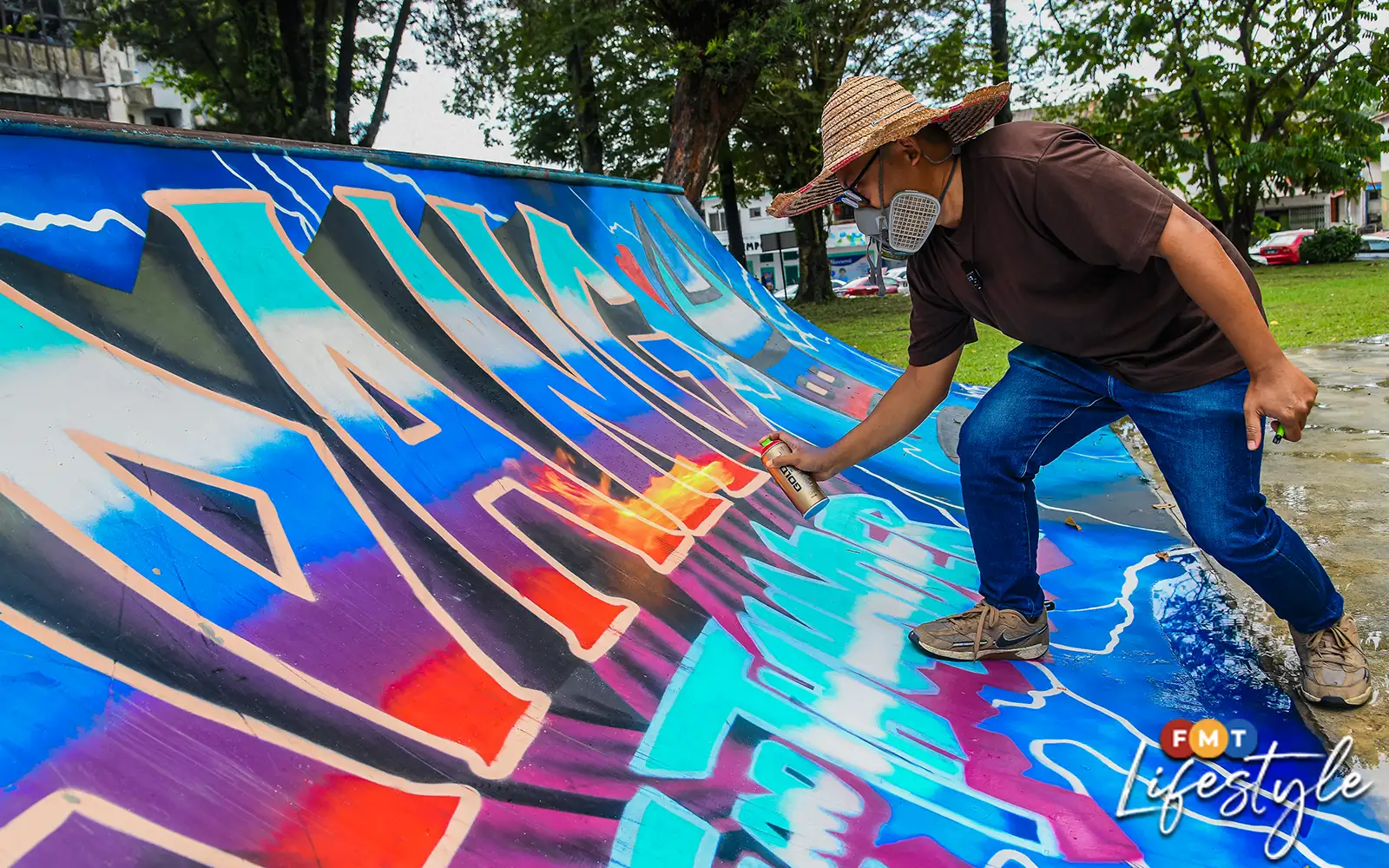
FMT Lifestyle joined him at the Taman Sri Gombak skate park as he put the finishing touches on an artwork featuring his signature symbol.
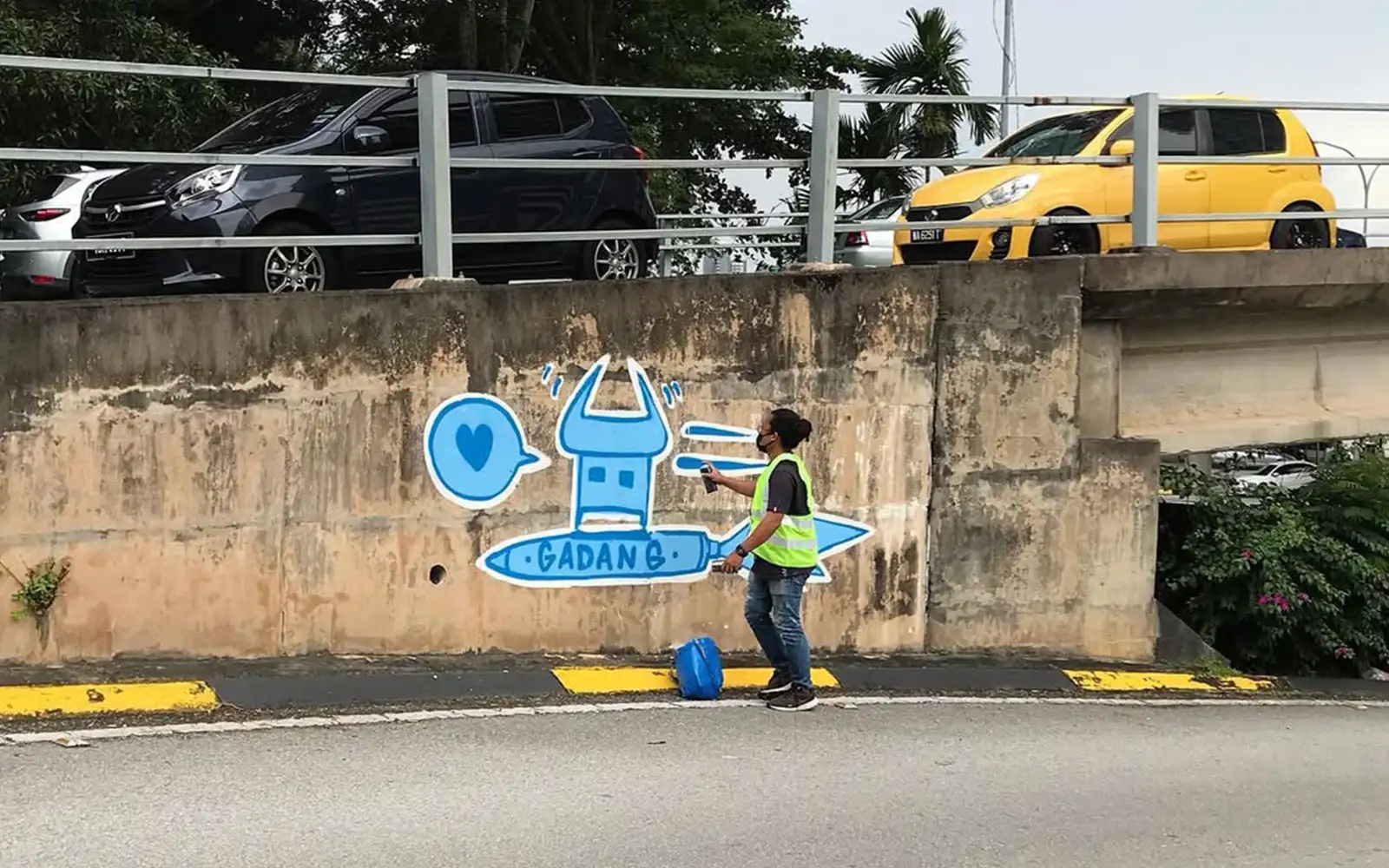
The main character in his paintings, or sometimes hidden within them is a small rectangular figure with two eyes and two big horns. But it’s not just any character; it’s his interpretation of a traditional Minangkabau house, the “rumah gadang”.
“My ancestors are from Minangkabau, so it’s my roots, where I come from, and I’m just trying to apply that in my work,” Gadang told FMT Lifestyle.
The Rumah Gadang, is the traditional communal longhouse of the Minangkabau people. Its most distinctive feature is the multi-tiered, upswept roof with pointed ends that resemble buffalo horns, a detail echoed in the horned character of all Gadang’s artwork.
For him, it’s about sharing his cultural identity with others.
“A lot of people ask me, ‘What is this symbol?’ Nowadays, the public is not only curious but also very happy to see my work,” he said.
His latest painting at a skatepark, which took around three to four days to complete, is inspired by the film “Thor: Love and Thunder”. Gadang portrays his character and the word “Gadang” in bright blue and street style font, surrounded by lightning.

“Gadang means ‘huge.’ So, I try to make my paintings big and impactful,” he shared.
Amid the park’s worn and faded surroundings, this painting bursts with life, drawing attention the moment you see it.
“Basically, when I paint, I want to give back to the community, to beautify the place. Sometimes I’ll add positive quotes to lift people’s spirits,” Gadang said.
At the heart of his concept is the idea of home, not just a building, but a place of comfort, safety, and belonging. Through his art, Gadang invites the public to consider what makes a place feel like home.
“I want to express that wherever you go, that’s where home is, like my Rumah Gadang.”
Speaking about his beginnings Gadang said: “I actually started doing graffiti not using spray paint but using crayon, drawing on the walls in my room. That time I really liked dragon ball, so that was all over my room.”
Today, you can spot Gadang’s work all over the country, from Klang Valley to Perak and even Tioman Island, whether his works can be found in a park, a back alley, or under a flyover.
However, he added that graffiti is also serious business, with artists often competing by covering each other’s work.
Next to his work in Taman Sri Gombak, you’ll see another piece on a skate ramp featuring a rabbit. This is created by Annie Nah, who works with Gadang at Pep Studio, a mural/graffiti collective founded in 2014 for their bigger, commissioned projects.
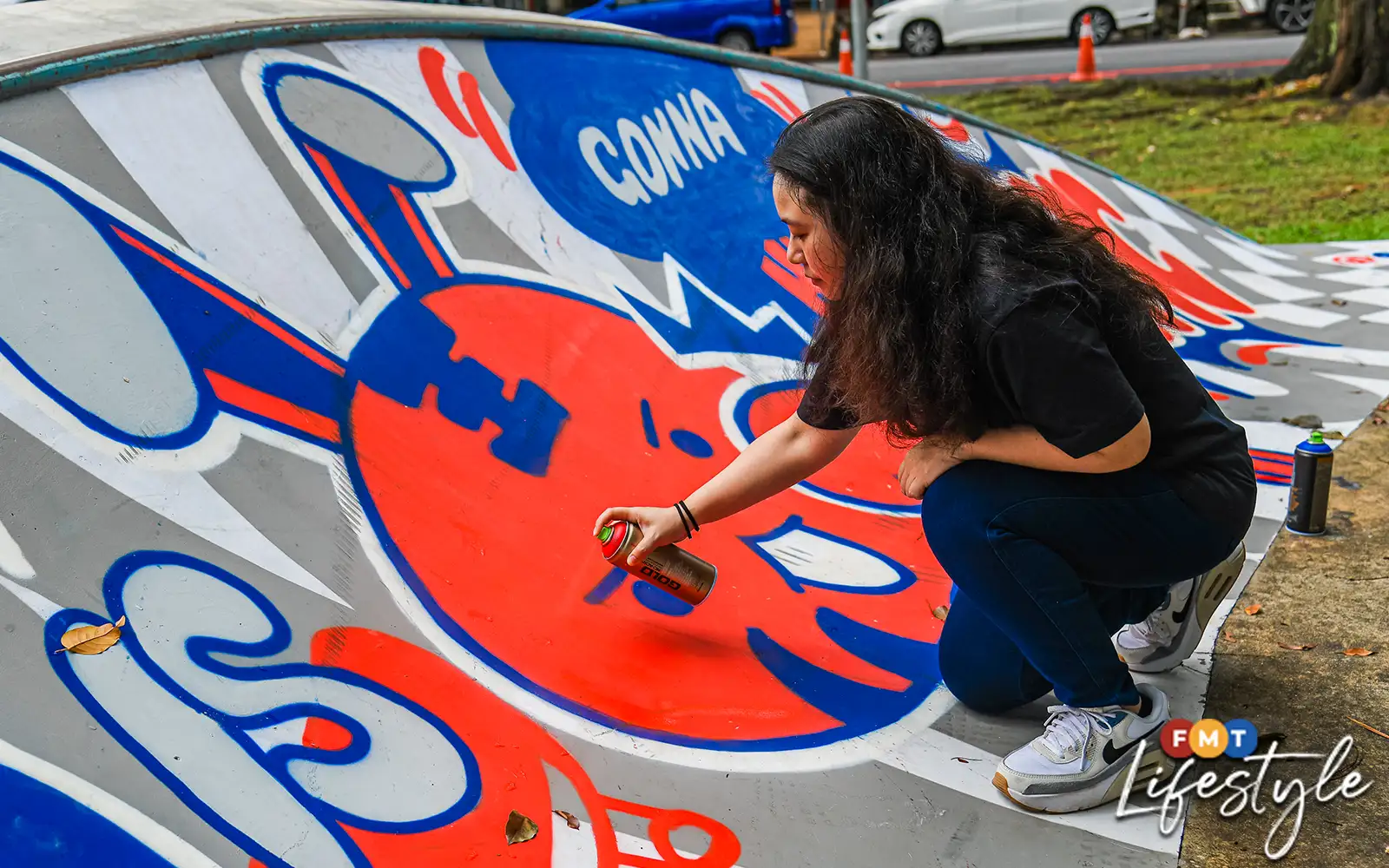
“According to the Chinese calendar, my birthday falls between the Year of the Rabbit and the Year of the Tiger, so I decided to create a hybrid of both animals as my main character in all my murals,” Nah said.
“What I enjoy most about graffiti is interacting with the public while I’m creating it,” she added.
While Gadang focuses on bold, almost retro-style pieces, Nah’s work is playful and cartoon-like.
One of their biggest accomplishments was a mural in Kepong, completed three years ago, spanning four walls and taking a month to finish.
By blending their unique styles with cultural roots, these artists turn ordinary walls in Malaysia into expressions of identity, showing that graffiti can be both striking and deeply symbolic.
Follow Gadang One and Annie Nah on Instagram. Check out Pep Studio on Facebook.