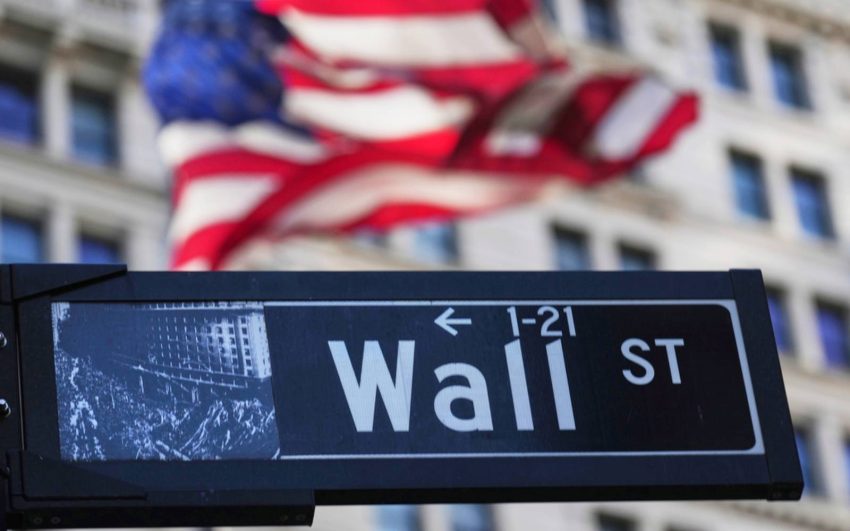
Nvidia will draw Wall Street attention as it reports quarterly results on Wednesday, with investors eager for evidence of AI race momentum. (File pic)
NEW YORK: Wall Street stocks ended mixed on Friday as investors looked ahead to Nvidia’s quarterly results next week and worried that the Federal Reserve may hold off on cutting US interest rates in December.
The Nasdaq ended higher and the S&P 500 finished marginally weaker after an early selloff that dragged all three major Wall Street indexes down more than 1%.
Investors in recent days have fretted about the pace of rate cuts and pricey valuations of heavyweight artificial intelligence stocks that have fuelled much of the US stock market’s gains in recent years.
Nvidia, Palantir and Microsoft each gained more than 1%.
Expectations the Fed will cut rates at its December policy meeting have faded in recent days amid signs of persistent inflation, caused in part by US President Donald Trump’s global tariffs. The probability of a 25-basis-point rate cut in December has fallen to under 50% from 67% last week, according to CME Group’s FedWatch tool.
Kansas City Fed president Jeffrey Schmid said on Friday his concerns about “too hot” inflation go well beyond the narrow effects of tariffs, signaling that he could dissent again at the Fed’s December meeting should policymakers opt to cut short-term borrowing costs. He was one of two dissenters in the Fed’s October decision to lower the policy rate by a quarter of a percentage point.
AI chipmaker Nvidia will be at the centre of Wall Street’s attention when it reports quarterly results on Wednesday, with investors eager for fresh evidence that a race to dominate the emerging technology is not losing steam.
“We’ve got a huge event next week with Nvidia,” said Mike Dickson, head of research and quantitative strategies at Horizon Investments in Charlotte, North Carolina. “If Nvidia disappoints, they will be punished. But I also think that – kind of like you’re seeing today – you’ll see dip buyers come back in pretty quickly and stabilize things.”
UnitedHealth Group declined 3.2% and Visa lost 1.8%, both weighing on the Dow.
The S&P 500 fell 0.05% to end at 6,734.11 points.
The Nasdaq gained 0.13% to 22,900.59 points, while the Dow Jones Industrial Average declined 0.65% to 47,147.48 points.
Seven of the 11 S&P 500 sector indexes declined, led lower by materials, down 1.18%, followed by a 0.97% loss in financials.
For the week, the S&P 500 rose 0.1%, the Dow added 0.3% and the Nasdaq lost 0.5%.
Concerns about the labor market’s health and the inflation outlook have weighed on investors, who expect some permanent gaps in official economic data even after the record-long US government shutdown ended on Thursday.
In global trade, the Swiss government said US tariffs on Swiss goods will be reduced to 15% from 39%.
Warner Bros Discovery gained 4% after the entertainment company said it had amended CEO David Zaslav’s employment agreement amid a strategic review of its business.
Cidara Therapeutics shares more than doubled after Merck said it will acquire the company in an almost US$9.2 billion deal.
Declining stocks outnumbered rising ones within the S&P 500 by a 1.7-to-one ratio.
The S&P 500 posted 12 new highs and 10 new lows; the Nasdaq recorded 52 new highs and 295 new lows.
Volume on US exchanges was 20.1 billion shares, just below the average of 20.2 billion shares over the previous 20 sessions.