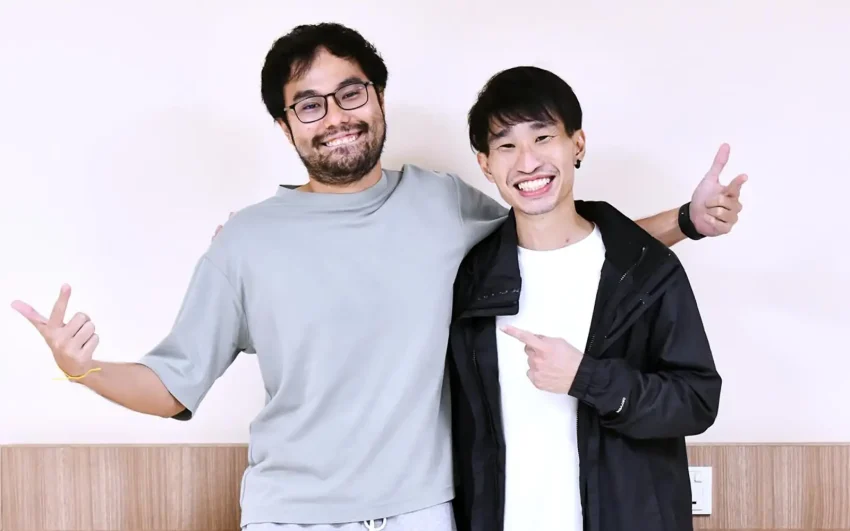

GEORGE TOWN: Nearly a decade after they first met through Penang’s independent music scene, Isaac Ho gave his friend Lau Jay Lim something far more lasting than memories of a shared stage – one of his kidneys.
The transplant, carried out about four weeks ago, has given Lau what doctors say is a second chance at a near-normal life after chronic kidney disease (CKD) pushed him to the brink of long-term dialysis.
It has also marked what doctors described as the first kidney transplant to be carried out in Penang – and among the very rare cases in the country involving a living donor who was not an immediate family member.
Today, both men are recovering well. Lau, a 35-year-old coder and musician, is largely homebound as doctors monitor him closely and manage the immunosuppressive drugs he must now take daily.
For him, the speed and certainty with which Ho stepped forward still feels surreal. “When I told Isaac about it, he offered to donate in a heartbeat,” he told FMT.
Ho, also 35, confirmed that he did not take long to make up his mind. “I thought about it for one day, and the next day I asked, ‘Can I give you my kidney?’”
The duo met in late 2017 through the local arts circuit, where both were involved in indie acoustic folk music. Ho, who had moved to Penang from Kuala Lumpur, said he was struck by Lau’s talent and they quickly became friends.
Neither could have imagined then how important that friendship would one day become.

Jay said his illness had crept up on him quietly. “The thing about CKD is that you don’t really observe any symptoms until it’s too late. You can live your life normally and it could just go unnoticed for a long time.”
According to consultant nephrologist Dr Vijaya Ramasamy, Lau did not fit the usual profile of many kidney-failure patients, who are often older and have diabetes or high blood pressure.
In this case, doctors suspect an autoimmune disease may have been the cause. But they could not confirm this because by the time Lau sought treatment, his kidneys had already shrunk significantly.
“When he first walked into my clinic, he was grey in colour, weak, his blood pressure was very high, his haemoglobin was low, and he was in a bad state,” Vijaya recalled.
Lau soon ended up on dialysis, a treatment that left him drained and tied to repeated hospital visits. Even on dialysis, his blood pressure remained hard to control.
He had to go on multiple medications and, like many kidney-failure patients, faced the prospect of a life shaped by medical appointments, dietary restrictions, and uncertainty.
Lau said he had begun exploring a transplant even before starting dialysis, believing it would offer the best quality of life. But he kept running into dead ends.
As no immediate family member was in a suitable position to donate, and his fiancée was of a different blood group, he was told the transplant route was unlikely to happen.
Lau said he later came across health ministry guidelines showing that non-relative donation was possible under a strict approval process, which led him to Vijaya.
That process required the pair to go before an independent transplant committee in Kuala Lumpur to be assessed for any sign of coercion or financial inducement.
The pair also underwent extensive medical, psychological and ethical checks before approval was finally granted by health director-general Mahathar Abd Wahab.
The wait took about three months.

Consultant urologist and transplant surgeon Dr Sritharan Subramaniam shared that the surgery itself consisted of two parts.
First, Ho’s kidney was removed through a laparoscopic procedure using small incisions. Then it was transplanted into Lau.
The donor operation took about three hours, while the transplant itself took another three to four hours.
“We do the surgeries side by side to reduce the duration of the kidney being without blood supply. The donor procedure was done laparoscopically, which means less pain, less blood loss, faster recovery and minimal scarring,” he explained.
Ho was discharged after three days. The doctors say the result so far has been encouraging.
Vijaya shared that Lau’s creatinine level, a key indicator of kidney function, had fallen from around 1,500 to 2,000 before the transplant to 76 after surgery, which is within the normal range.
“For someone of his age, transplant offers the best chance of returning to a near-normal life. Dialysis keeps people alive, but it is not a natural replacement for kidney function,” Vijaya added.
The doctors hope the case will raise awareness about the silent nature of CKD, and that organ donation can lead to more brighter futures than one might realise.
Indeed, Sritharan said public understanding of organ donation remains low even though it can transform lives. While many people pledge their organs, their wishes might not be carried out if family members do not agree with it at the point of death.
“So even if you pledge, make sure you talk about it with your family. Make sure they understand that this is your wish,” he stressed.

He also said many people have concerns about whether they can live with just one kidney. Thorough screening means donors are only accepted if doctors are satisfied that they can continue leading healthy lives.
For Ho, this was never a major concern: all his health markers were in good range before the operation, and he felt confident he would recover as he had spent years taking care of his health.
For him and his wife, Sabrena Arosh, 34, the idea of donation was simple. “Someone needs it, we just give,” she said.
Silent disease, hidden costs
The transplant has also highlighted a wider issue for patients beyond the Klang Valley. Until now, many patients in Penang and the northern region have had to look to Kuala Lumpur for transplant care.
Unfortunately, making the move can be emotionally and financially exhausting, especially when post-surgery follow-up may keep them there for weeks or months.
For Lau and his family, the financial burden does not end with surgery. The lifelong medication after a transplant can still be costly, which can be immensely difficult for those who undergo the procedure privately only to later discover they cannot easily get help with medication.
Lau hopes this can be looked at more fairly, saying what matters most is that patients continue getting the treatment they need after surgery.
He also expressed that being able to undergo the procedure in Penang, where his support system is, has made a huge difference.
“If I had to go through all this in KL, away from home, it would have been a whole different thing. Not many people have the luxury of uprooting their lives for three months,” he said.
Both men are now easing back into ordinary life. Ho is playing music again. Lau is slowly recovering at home, grateful for a future that once seemed to be slipping out of reach.
He insists the real credit belongs elsewhere. “He is the true hero,” Lau said, referring to Ho. “He and the doctors. I just happen to be the lucky person.”