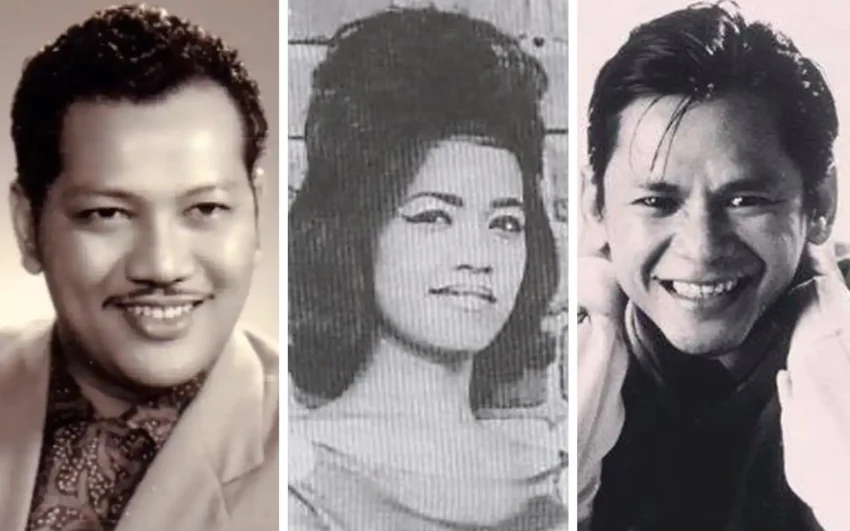

PETALING JAYA: On Raya morning, the songs return first.
They drift through shopping malls and coffee shops, ride along crowded highways, and float from living rooms where families prepare for open houses.
Wherever Aidilfitri gathers people together, the same melodies rise again. And Malaysians sing along without thinking.
Decades after they were first recorded, songs by icons like P Ramlee, Saloma and Sudirman Arshad remain the heartbeat of Raya — melodies that travel easily across generations yet never seem to age.
Why the classics endure
For music director Raja Farouk Raja Zaini Ismail, the enduring appeal of these songs begins with musical craft.
Many of Ramlee’s compositions sound simple at first – the melodies are easy to remember, the arrangements feel effortless. But beneath that simplicity lies remarkable detail.
“When you actually study the music, you realise the chord structures and arrangements are quite complex,” Raja Farouk said.
Ramlee often blended traditional Malay musical elements with Western orchestral influences, an approach Raja Farouk described as “quietly innovative”. Violins, brass sections and flutes appeared in arrangements rarely heard in local popular music at the time.
“It was only much later that I realised there was a reason why he wrote his songs that way,” he said. “He was not trying to be difficult. He was just trying to be musical.”
The lyrics helped anchor those songs in everyday life.
Released in 1959, “Dendang Perantau” still resonates because it captures a familiar Raya experience — celebrating far from home.
The song tells the story of a traveller marking Hari Raya away from family, a feeling many Malaysians still understand today.
For Raja Farouk, that emotional honesty explains the song’s lasting power. “For once, I would say the melody played a second role. It’s the story and the writing.”
Songs that unite Malaysians
Singer and actor Sean Ghazi, who portrayed Ramlee in a stage musical in 2007, said the legendary entertainer embodied a distinctly Malaysian identity shaped by many influences.
“He represents the prototype Malaysian,” he said. “If you’re looking for an example of what it means to be Malaysian, he comes very close.”
That openness, which shaped Ramlee’s artistic style, helped his music travel easily across communities.
Sean describes him as “very cosmo”, from the way he dressed to the way he carried himself, an artiste comfortable drawing inspiration from many cultures.
Sean remembers noticing this during a recent ride-hailing trip.
“I was recently on a Grab ride, and the driver, a Chinese uncle, was humming to ‘Getaran Jiwa’,” he said.
“And that’s kind of cool. P Ramlee belongs to the older generation but also to the new generation and future generations. So that’s super powerful as an artiste.”
Younger artistes rediscover the classics
Singer and content creator Chin Pui Ting, better known as Pudds, said she grew up hearing little of these songs.
“I feel like this is quite common among Malaysian Chinese, we were not really exposed to P Ramlee or Saloma as kids. I heard their names in school textbooks but I didn’t really know their songs.”
Her appreciation grew as she became more involved in the Malaysian music scene and began exploring Malay music more deeply.
That journey eventually led her to perform some of the classics herself.
“I really wanted to pay homage to the reason why I got into Malay music in the first place,” she said. “I also just love them in general.”
Among the songs she has performed is “Bunyi Gitar”, popularised by Saloma.
For Pudds, the emotional power of these songs explains why they still connect with listeners today. “Music conveys feelings so much better than words alone,” she said.
“Music transcends words and languages. You can listen to any piece in any language and still feel something.”
Remembering Sudirman
Few songs capture the spirit of Raya like “Balik Kampung”. Released in 1984, Sudirman’s anthem remains one of the most recognisable songs in Malaysia’s festive soundtrack.
The song celebrates a journey every Malaysian understands: the pull of home, where loved ones wait and familiar faces greet you at the door.
Sudirman’s nephew, Razman Azrai Zainudin, or Atai, knows the legacy of those songs well.
A singer himself, Atai released his debut album “Sahabat” in the 1980s under Sudirman’s guidance, with the celebrated entertainer helping to shape the record.
Part of the enduring appeal of “Balik Kampung”, he said, lies in how uniquely Malaysian the idea behind the phrase is. “Until today, there is no equivalent English word for it,” he said.
“When you actually want to do that during Raya or Deepavali, you can only say: are you going to balik kampung?”
He believes the sincerity behind Sudirman’s music also explains why it still resonates decades later.
More than three decades after Sudirman’s passing, Razman believes his uncle’s work still reflects a defining chapter in Malaysia’s cultural story. “He was a treasure and a mirror of what Malaysia was in the 1980s.”
And every Raya, as families pack cars, board buses or step onto flights home, Sudirman’s voice still travels with them, just like the voices of P Ramlee and Saloma.
Because somewhere along the journey — on a highway, in a living room, at an open house — the song rises again, singing of the moment every Malaysian knows:
“Terbayang wajah-wajah yang ku sayang,” picturing the faces of the ones we love waiting at home.