
From Boo Jia Cher
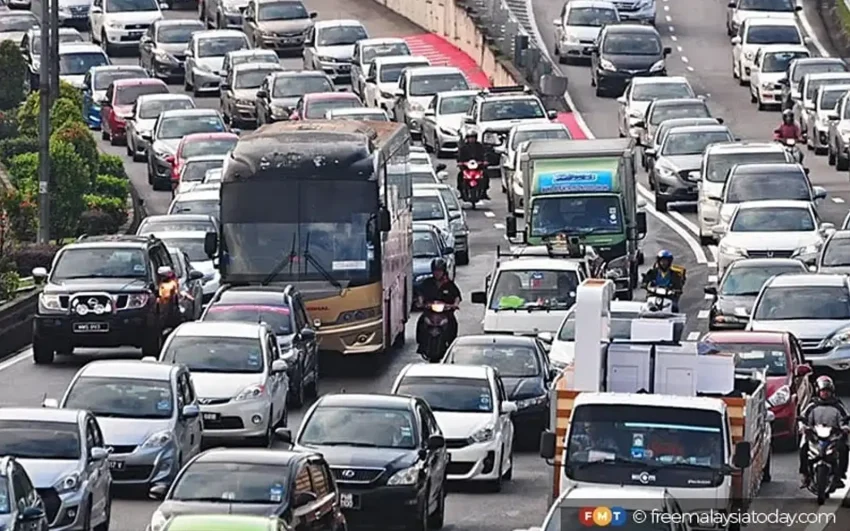
According to the transport ministry, Kuala Lumpur’s congestion has surged to 43.4%, costing residents about 84 hours a year stuck in traffic.
Sobering, yes. Surprising, no.
For decades, congestion in the Klang Valley has been treated as a technical problem to be solved with wider highways and more flyovers. Yet each expansion has only entrenched the issue.
This is because congestion is not simply a traffic problem. It is the inevitable result of a city built around car-dependent urban sprawl.
As housing spreads ever further outward while jobs remain concentrated in KL, millions of people are forced into long daily commutes. Highways are then expanded to accommodate them, which only encourages the city to sprawl even further.
If KL truly wants to solve congestion, we must stop treating traffic as an engineering puzzle and recognise it for what it really is: an urban planning failure.
Fixing it requires a strategy that provides immediate relief while gradually reversing sprawl and rebuilding the city around dense, liveable neighbourhoods connected by strong public transport.
Fix the bus first
The fastest improvements can come from the humble bus.
If Malaysians are to drive less, the alternative must be reliable. No matter how many rail lines we build, not everyone can live within walking distance of a station, but a bus stop can reach almost anywhere.
Currently, buses remain too infrequent and unreliable to compete with private cars.
The government must expand the Rapid KL bus fleet to several thousand vehicles, up from just over 1,000 today. Waiting times on major routes must fall to no more than 15 minutes. Few commuters will choose a bus if the wait stretches to 30 or 40 minutes.
Global evidence is clear: a bus that comes often becomes a bus people actually use.
Infrastructure must support the system. Dedicated bus lanes on roads such as Jalan Ampang and Jalan Genting Klang should be expanded, made permanent and strictly enforced. Without priority lanes, buses simply become cars carrying more passengers, stuck in the same traffic they are meant to solve.
Make streets walkable
Public transport cannot work if reaching it feels dangerous.
Walking in KL today is an obstacle course of broken pavements, missing sidewalks and hostile roads designed entirely for cars.
Fixing this does not require billion-ringgit megaprojects. Protected pathways, safer crossings and traffic calming can dramatically improve safety at relatively low cost.
These changes matter more than many realise. School drop-offs alone account for up to 25% of morning peak traffic. If children could safely walk, cycle or take the bus to school, thousands of daily car trips would disappear almost overnight.
Stop the sprawl
But buses and sidewalks alone cannot solve congestion if the city continues expanding endlessly outward.
The deeper problem is structural: jobs remain concentrated in KL while housing spreads across the Klang Valley and into rural Selangor and even Negeri Sembilan. Each new township marketed as affordable and conveniently connected by highways locks thousands more families into long commutes.
To reduce congestion, KL must bring housing back into the city.
Underutilised office buildings and ageing commercial lots should be incentivised for conversion into affordable housing for young professionals and families. Living in the city must become attainable and attractive again.
At the same time, policies that lock cities into car dependency must be removed. Chief among them is the minimum parking requirement, which forces developers to build excessive parking regardless of demand.
A recently completed condominium beside LRT Pudu devotes around eight storeys to parking – a counterproductive design beside a rail station in the middle of the city. Such mandates inflate housing costs while encouraging car use.
Rebuild the city
In the long term, KL must move towards a 15-minute city, where daily needs are within a short walk or bicycle ride.
Open-air parking lots in central KL should gradually give way to dense, mixed-use neighbourhoods centred around transit. Many rail stations today remain surrounded by highways and parking lots, undermining the purpose of building expensive rail systems.
Major corridors like Jalan Tun Razak and Jalan Maharajalela should also evolve from chaotic car arteries into multimodal boulevards with dedicated bus lanes, protected cycling paths and wider tree-lined sidewalks.
Eventually, KL must also confront the politically sensitive issue of congestion pricing. Charging vehicles to enter the busiest districts – as done in cities like Singapore and London – has proven effective in reducing traffic while funding public transport improvements.
The political choice
KL’s congestion crisis is not caused by a lack of ideas. Researchers, activists and civil society groups have long proposed practical solutions. What’s missing is political will.
The transport ministry, under Loke Siew Fook, can improve buses and rail. But transport policy alone cannot solve congestion. Urban planning and mobility are inseparable.
If housing continues sprawling across the Klang Valley while jobs remain concentrated in KL, even the best public transport system will struggle.
Ending congestion ultimately means confronting the deeper problem of sprawl and rebuilding Kuala Lumpur as a dense, green and transit-oriented city.
Boo Jia Cher is a FMT reader.
The views expressed are those of the writer and do not necessarily reflect those of FMT.