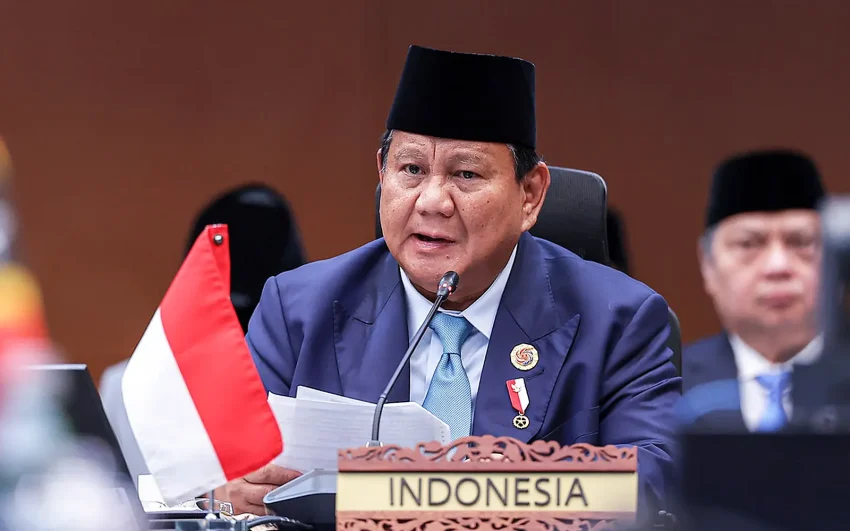
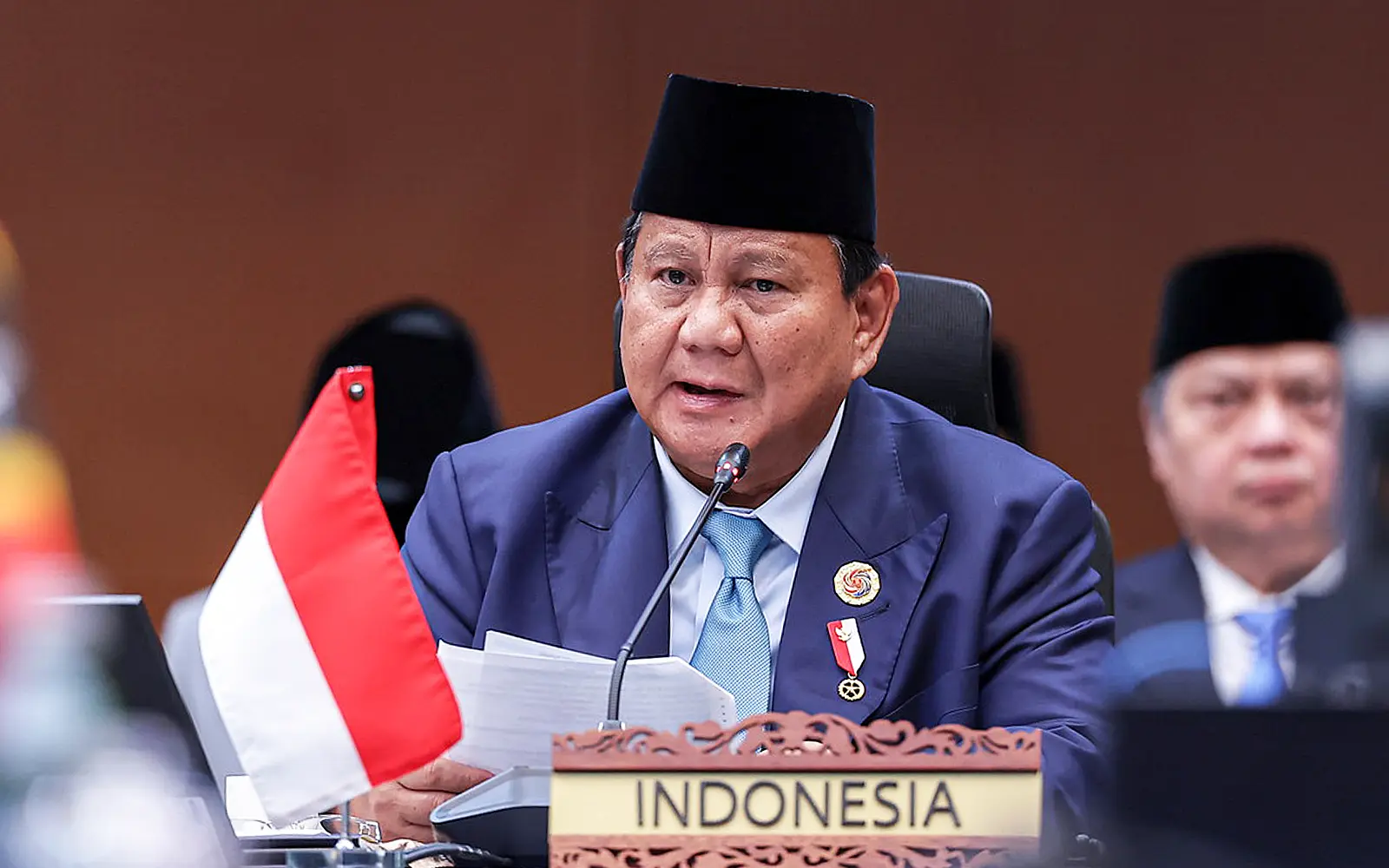
JAKARTA: As Indonesia’s stock market plummeted in late January, President Prabowo Subianto was furious.
Key cabinet ministers huddled at his rural hillside home in Bogor, an hour’s drive from Jakarta.
The meeting quickly turned into a blame game, according to people familiar with the matter, who requested anonymity for fear of reprisals.
“Prabowo questioned if local tycoons and their businesses were responsible, and asked if any foreigners were trying to mess with him and Indonesia,” the people said.
A few of the ministers told him that wasn’t the case, pointing the finger solely at officials with the financial regulator and stock exchange who had failed to address MSCI Inc’s concerns about investability and market transparency, the people said.
Fire them all, Prabowo retorted, according to people familiar with the conversations.
The heads of the Financial Services Authority and the Indonesian Stock Exchange both resigned in the aftermath.
To Prabowo’s team, the response to Indonesia’s worst equity rout since 1998 shows a decisive leader who acted quickly to stem the losses and hold officials accountable.
They view the two-day selloff as an isolated incident, and intend to push ahead with plans to take on the country’s tycoons, nationalise resources and stretch the limits of fiscal structures in place for decades.
Yet interviews with more than half a dozen people familiar with the inner workings of his presidency, many of whom asked not to be named, say the MSCI episode encapsulates broader concerns about the direction of Indonesia under Prabowo.
They described a leader prone to lashing out, who is surrounded by advisers with conflicting agendas and who lack the attention to detail to follow through on his bold plans.
Representatives for Danantara declined to comment.
Indonesia’s opaque ownership rules and low minimum free float requirements – the amount of shares available for public trading – have been a cause of investor consternation for years.
About a quarter of listed companies in the country have free floats of less than 15%, Bloomberg data show.
Some companies have higher reported free floats, but their shares have very low trading volume.
Many of Indonesia’s largest listed firms are tightly held by controlling shareholders, which limits trading liquidity and heightens the risk of sharp swings in share prices.
A major problem has been verifying that companies actually have as many tradeable shares as they claim.
The widening disconnect between Prabowo’s inner circle and how he is perceived – both by Jakarta elites and international investors – adds to the tumult since he took office in late 2024.
Deadly riots have flared over inequality, authorities have seized parcels of land the size of Switzerland and the rupiah has been among Asia’s weakest performing currencies in the past year.
“Market sentiment does not appear to be the principal driver of this administration’s agenda,” said Douglas Ramage, managing director at BowerGroupAsia Indonesia, a strategic advisory firm.
“Any meaningful course correction would hinge less on short-term market turbulence and more on whether economic pressures begin to weigh on growth and erode his broader public support,” he said.
The government communications agency, which handles the president’s communications, didn’t respond to a request for comment.
Prabowo, speaking in Jakarta on Friday, emphasised the importance of adhering to the rule of law and asked ministers to be more active disseminating government policies to stakeholders abroad.
Prabowo spends much of his time at his home outside of Jakarta, only heading to the presidential palace for events like cabinet meetings and visits by foreign leaders, according to people familiar with the matter.
Top business leaders privately describe him as the most elusive president in Indonesia’s history, and struggle to get an audience, they added.
Hashim Djojohadikusumo, Prabowo’s brother and a close advisor to the president, said last week the president was unaware of the issues flagged by MSCI.
“It should not have been a shock, but it was a shock for the government because the government wasn’t informed,” Hashim said at a business forum on Feb 10.
“I’m talking about the highest levels of the government,” he said.
Still, he added, overall Indonesia’s economy has good fundamentals.
“It’s now basically correcting the, let’s say, mistakes,” Hashim said.
“I would say the moral mistakes that have been committed with regard to the stock market, the capital markets,” he said.
Prabowo’s administration has until May to implement the reforms sought by MSCI over free floats and opaque shareholding structures to avoid a downgrade to “frontier market” status from emerging market.
That scenario would likely force many international investors to pull money out of Indonesian stocks.
Earlier Warnings
Long before MSCI’s ultimatum, key figures in government had called for increased trading transparency – but regulators and the stock exchange brushed them aside, people familiar with the matter said.
“Pandu Sjahrir, the CIO of Indonesian sovereign wealth fund Danantara, had pushed for rule changes since early 2025 because it was intending to be a market participant,” they said.
“Sjahrir’s view was that Indonesia’s stock exchange ought to be the most liquid avenue for investors to express confidence in the country, but its market capitalisation has lagged global peers,” the people said.
“He told regulators it would be difficult for Danantara to invest in a shallow market,” they added.
Representatives for Danantara declined to comment.
Indonesia’s opaque ownership rules and low minimum free float requirements – the amount of shares available for public trading – have been a cause of investor consternation for years.
“About a quarter of listed companies in the country have free floats of less than 15%,” Bloomberg data showed.
Some companies have higher reported free floats, but their shares have very low trading volume.
Many of Indonesia’s largest listed firms are tightly held by controlling shareholders, which limits trading liquidity and heightens the risk of sharp swings in share prices.
A major problem has been verifying that companies actually have as many tradeable shares as they claim.
One example occurred last August, when MSCI said it would add 28 stocks to its widely followed emerging markets benchmark.
Shares of one Indonesian company on the list – PT Dian Swastatika Sentosa – surged 41% within days, adding US$13 billion in market value. The average gain of the stocks to be included was about 2% over that same period.
Some asset managers complained to MSCI, because the price jump signaled the firm had relatively few shares available to trade, according to people familiar with the matter.
After hearing from investors, MSCI modified its inclusion plan by factoring in a lower free float of 13% for the conglomerate, from 25% previously.
Dian Swastatika Sentosa, a coal miner and power generator, is majority owned by the Sinar Mas Group, which is controlled by one of Indonesia’s wealthiest families.
Its shares fell after MSCI’s move before climbing again. Sinar Mas redirected a request for comment to Dian Swastatika Sentosa, which didn’t respond.
Following the incident, MSCI had a series of reviews and discussions with Indonesian regulators and the finance ministry about the lack of transparency in the country’s US$880 billion equity market – and how much of it was actually accessible to investors.
In October, MSCI formally started a consultation on how to estimate the free float of Indonesian stocks. Local equities tumbled on the news.
Danantara again pushed regulators and the stock exchange to make improvements, and some of the sovereign fund’s staff initiated calls with MSCI to provide assurance and get clarifications, the people familiar said.
These messages were passed on to Indonesia’s financial regulators and the stock exchange, but no action was taken.
The Indonesia Stock Exchange and Financial Services Authority didn’t respond to requests for comment.
MSCI said it had opened the consultation following market feedback and further analysis, and closed it at the end of December.
A representative for the finance ministry declined to comment.
In January, some members of the financial regulator and the stock exchange met with MSCI executives in New York, where they pledged reforms but also didn’t present concrete solutions, according to the people familiar.
After returning to Indonesia, they told the finance ministry and Danantara that they had convinced MSCI to hold off on its warning.
Things came to a head on Jan 28. Before the market opened, some Danantara staffers saw MSCI’s notice of a potential downgrade and warned of a big selloff, but officials in the financial regulator and stock exchange indicated a lack of urgency to take any action, people familiar said.
That afternoon, as the selloff intensified and cabinet ministers headed to Bogor to brief Prabowo, the stock exchange said it would meet the MSCI’s call for greater transparency and work with the index compiler to reach a consensus.
Yet it wasn’t until the next day – when the Jakarta Composite Index’s losses deepened to 17% – that the financial regulator finally pledged to reform shareholding structures and double the minimum free float requirement to 15%.
The stock exchange has since told investors that it’s aiming to resolve MSCI’s concerns by late February or March.
Indonesia also intends to accelerate plans to demutualise its stock exchange, and Danantara has said it’s assessing taking a stake of as much as 30%.
Louis Lau, a San Diego-based portfolio manager at Brandes Investment Partners, said changing the rules is easy, but making sure companies actually have enough tradeable shares will be the challenge.
The implementation and data collection will be the big test, he added, because companies may not be willing or open to disclosing the information.
“Does MSCI say, as long as you have the 15% rule, we’re happy,” Lau said.
“Or does MSCI say, we need to make sure that you are at 15% and what’s the timeline?,” he added.
Earlier this month, Moody’s Ratings lowered its outlook on Indonesia to negative from stable, while keeping its low investment grade rating of Baa2 on the country.
It said Indonesia’s policy has become more unpredictable and less cohesive, and communication has been less effective.
If sustained, it said, “the trend could erode Indonesia’s long-established policy credibility, which has supported solid economic growth and macroeconomic, fiscal and financial stability.”
Finance ministry officials, in recent discussions with the US credit ratings firm, pledged to make improvements, people familiar with the matter said. Moody’s didn’t respond to a request for comment.
For now, no significant policy shifts are expected. Prabowo and his administration remain intent on pushing ahead with his social-welfare policies, which include free meals for children, building low-cost housing and modernising the local fishing industry.
Mixed messages are adding to the sense of disarray. In late January, defense minister Sjafrie Sjamsoeddin, a close adviser to the president, told local media that Prabowo has ordered the boards of state-owned banks to be replaced because they were said to have caused losses to the state.
However, later that same day, investment minister Rosan Roeslani – also the chief executive of Danantara, which oversees all state-owned enterprises – denied any such plans were in the works.
The uncertainty over the direction of policy is hurting Indonesia’s growth prospects and competitiveness in the region, according to Tom Lembong, who served as a trade minister under the previous administration.
“The government has kind of painted itself into a corner,” Lembong said in an interview.
“There are probably mostly unpalatable policy options available to it at this point,” Lembong added.