BANGKOK: Thai Prime Minister Anutin Charnvirakul’s Bhumjaithai Party took an early lead in Sunday’s general election, though the three-way battle is unlikely to give any single party a clear majority, potentially prolonging the spectre of political instability.
Anutin set the stage for the snap election in mid-December, amid a raging border conflict between Thailand and Cambodia, in what analysts said was a move timed by the conservative leader to cash in on surging nationalism.
At that point, he had been in power for less than 100 days, taking over after the ouster of premier Paetongtarn Shinawatra of the populist Pheu Thai Party over the Cambodian crisis.
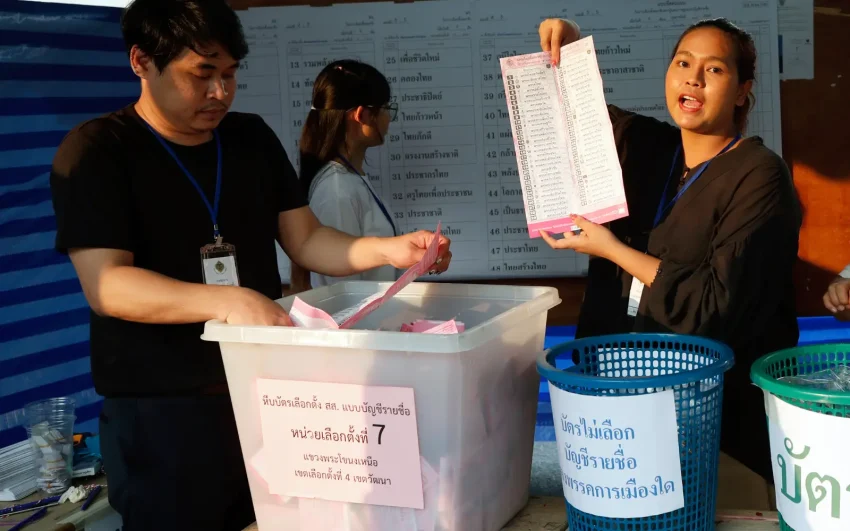
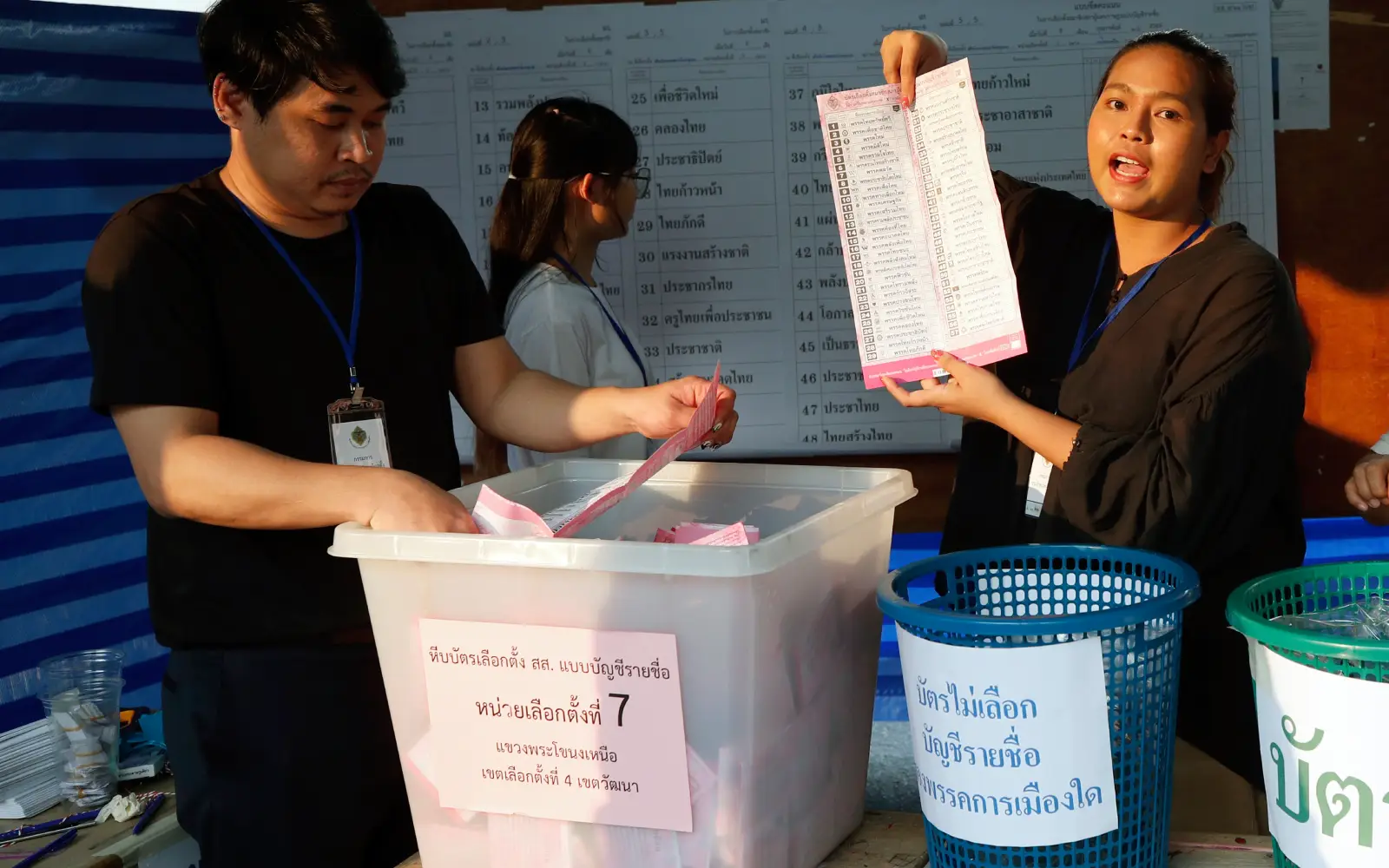
Thai voters turned out in numbers on Sunday. Polls closed at 5pm local time (1000 GMT) and preliminary results were trickling in throughout the evening.
With about 30% of polling stations reporting, the first partial results released by the election commission showed the Bhumjaithai Party with a commanding lead over the People’s Party in second place, followed by the Pheu Thai Party.
Pheu Thai, backed by the billionaire former Prime Minister Thaksin Shinawatra, who himself went to jail just days after his daughter’s removal, is down but not out, according to surveys.
“We have done everything that we can,” Anutin told reporters after casting his vote in the Bhumjaithai Party’s stronghold of Buriram city, northeast of Bangkok. “We hope the people will have confidence in us.”
The progressive People’s Party, with its message of structural change and reforms to Southeast Asia’s second-largest economy, had led most opinion polls during the campaign season.
“This election is about whether Thailand will get out of its rut, whether Thailand will break out of its political instability and economic doldrums that have persisted,” said Thitinan Pongsudhirak, a political scientist at Bangkok’s Chulalongkorn University.
“My preliminary conclusion, I’m afraid to say, is that it will not break out.”
A steady stream of voters walked into polling stations across Bangkok in the hours after polls opened, among them Suwat Kiatsuwan, a 44-year-old company worker.
“I don’t want the same people anymore,” he said, after casting his ballot. “If we vote for the same as before, nothing will change. We were going nowhere.”
Pre-election survey
Even as the People’s Party rose in the pre-election polls, it faced the prospect of repeating its predecessor’s fate.
In a survey conducted during the final week of the campaign that was released on Sunday, the National Institute for Development Administration projected Bhumjaithai would be the winner with between 140 and 150 seats in the 500-member House of Representatives, ahead of 125-135 for the People’s Party.
Move Forward, the forerunner of the People’s Party, won the last election in 2023 only to be blocked from forming a government by a military-appointed Senate and conservative lawmakers, opening the door for Pheu Thai to take over.
This long-standing tussle between the powerful royalist-conservative establishment and popular democratic movements has created prolonged periods of uncertainty, punctuated by street protests, bouts of violence and military coups.
Constitutional referendum
Thai voters were also asked during the vote to decide if a new constitution should replace a 2017 charter, a military-backed document that critics say concentrated power in undemocratic institutions, including a powerful senate that is chosen through an indirect selection process with limited public participation.
The election commission’s early count showed voters backing the referendum by a margin of nearly two to one.
Thailand has had 20 constitutions since the end of the absolute monarchy in 1932, with most of the changes following military coups.
If voters back the drafting of a new national charter, the new government and lawmakers can start the amendment process in parliament, with two more referendums required to adopt a new constitution.
“I believe that the party that wins in the next election will have an outsized influence on the direction of constitutional reform, whether we move away from the junta-drafted constitution or not,” said Napon Jatusripitak of the Bangkok-based Thailand Future think-tank.
Different strategies
Bhumjaithai’s rise on surging nationalism unleashed by the Thai-Cambodia conflict – alongside the decline of Pheu Thai after its travails last year – has triggered a rash of defections and reshaped political battlegrounds, including vote-rich agrarian belts.
Some political parties have responded by drawing into their camps well-known local figures, including those from rival groups, aiming to capture personal loyalty networks that are key to winning in the hinterland.
The reform-minded People’s Party also changed its playbook, diluting the progressive movement’s anti-establishment stance and bringing in outside talent to convince voters that it has what it takes to run a government.
Former prime minister Abhisit Vejjajiva has thrown himself into the mix, leveraging his personal appeal to revive his once moribund Democrat Party, which could emerge as a key force in post-election coalition talks.