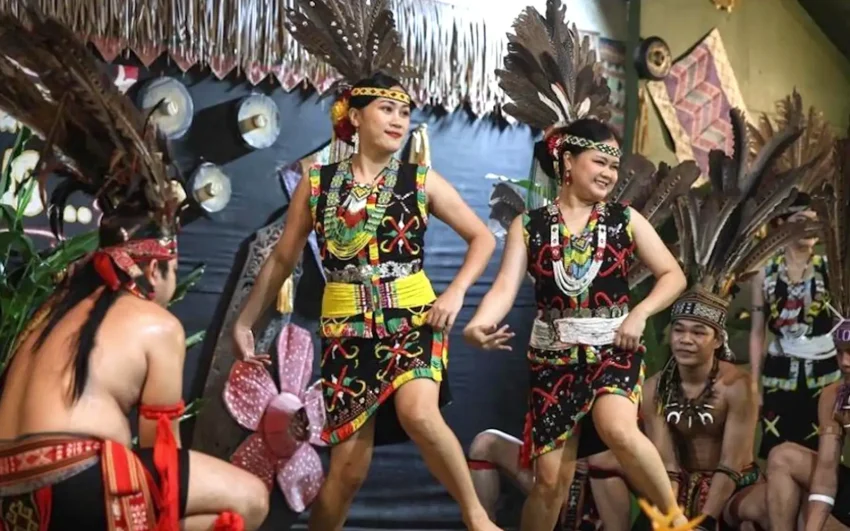
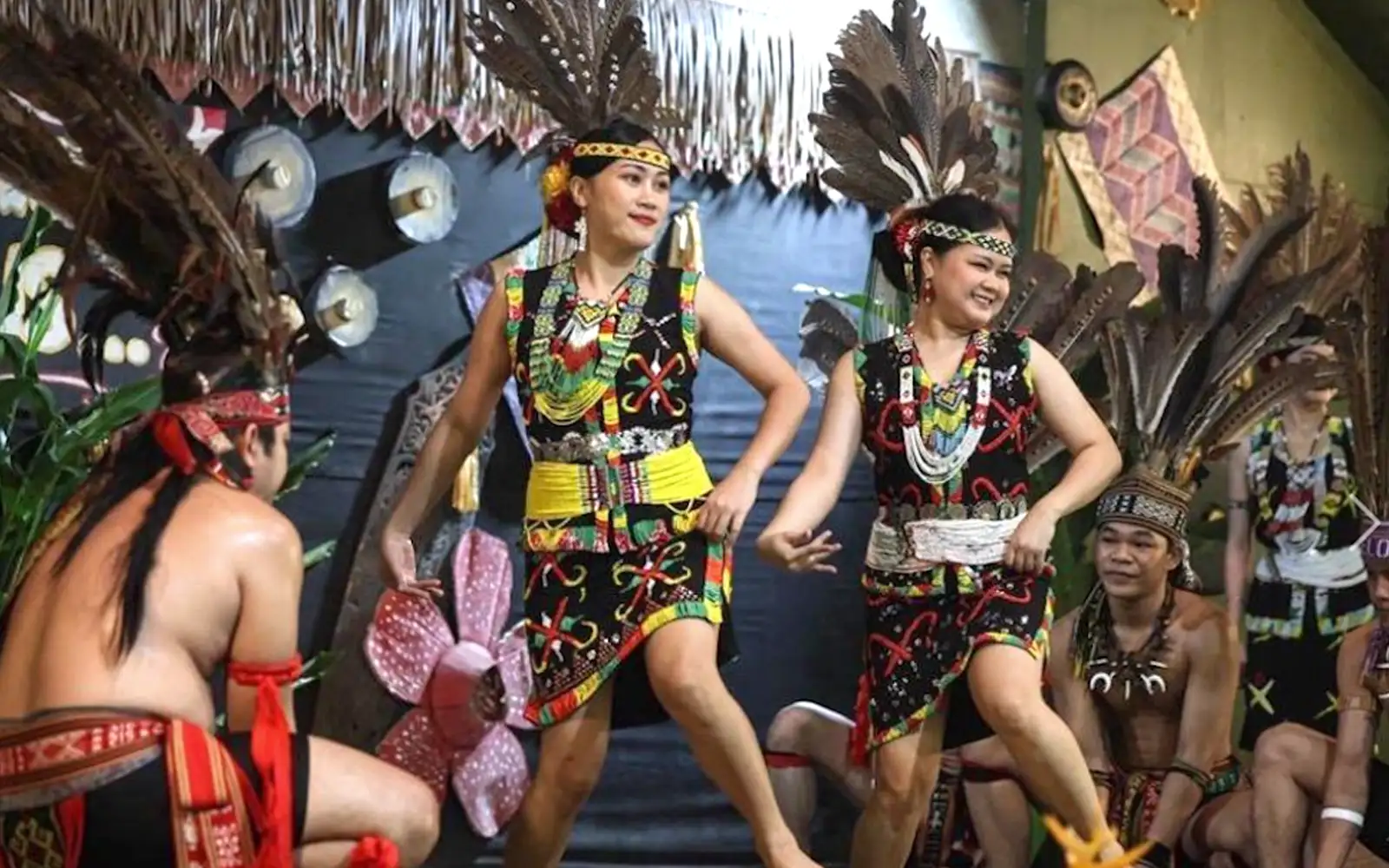
KOTA KINABALU: Tucked away in Inanam, just a short drive from Kota Kinabalu, the Mari Mari Cultural Village (MMCV) keeps Sabah’s colourful heritage alive – one dance step, one folklore, and one traditional home at a time.
Among the traditions preserved here is the Kadazan Dusun practice of placing bones and personal belongings in a large “tanjau”, or urn, to symbolise the soul’s journey to the afterlife. The ritual isn’t practised anymore, but the story behind it is still shared with visitors, many of whom are hearing it for the first time.
A wander through MMCV feels a bit like time travel: guests step into the traditional homes of the Dusun, Rungus, Lundayeh, Bajau and Murut communities, sample heritage dishes, and catch performances that bring centuries-old customs to life.
MMCV tour guide Mohd Aidil Pulian Abdullah, 38, said the centre, which opened in 2009, allows visitors to experience Sabah’s diverse culture in a single visit. Some of the practices featured here, he noted, are slowly disappearing elsewhere.
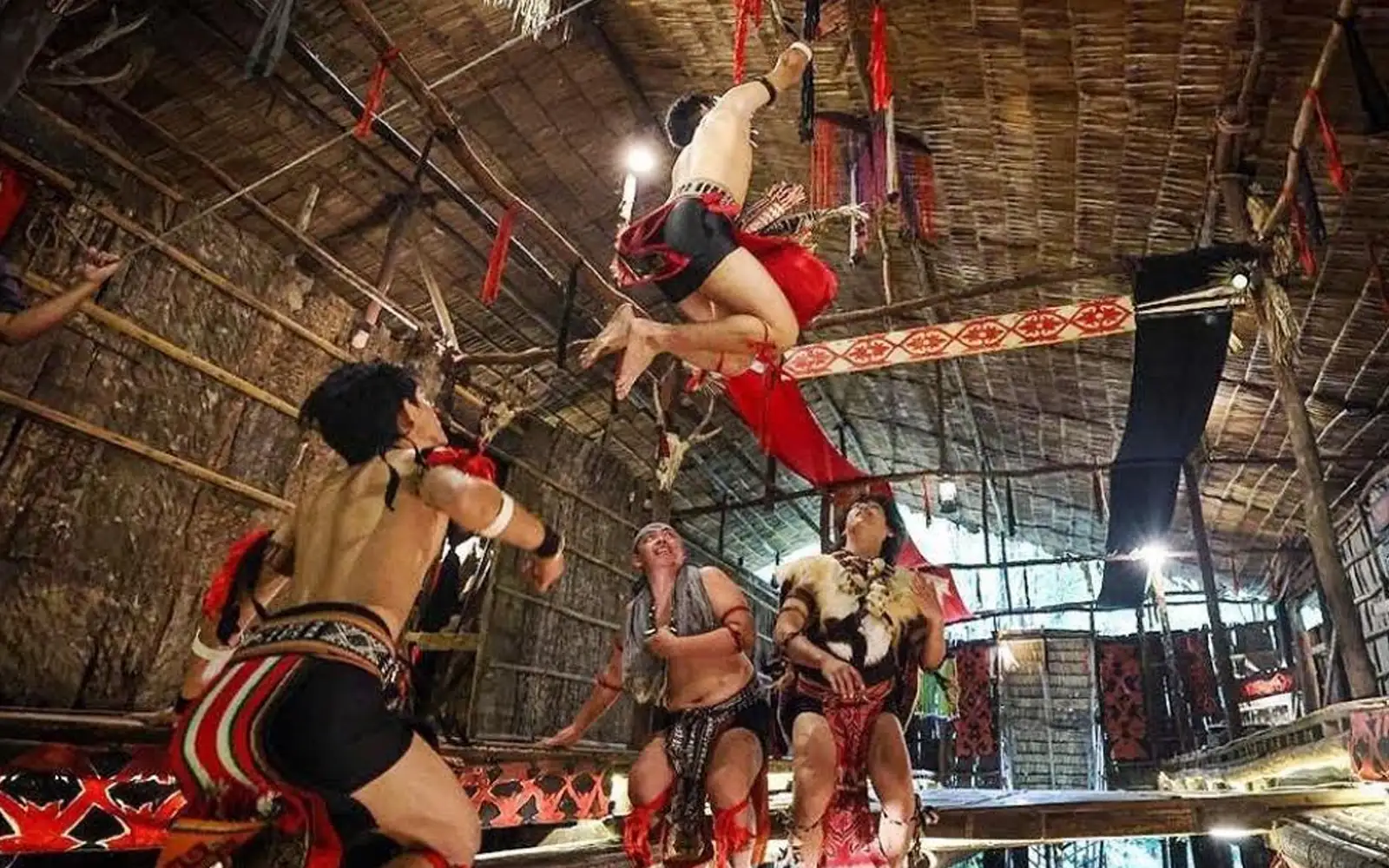
Among the rarely seen traditions are bamboo fire-starting techniques and the traditional game of “lansaran”. The game uses a trampoline-like bamboo floor that was once part of celebrations welcoming warriors home.
In “lansaran”, a prize is hung on a tall structure called a “kinkilat”. Participants must jump as high as they can from the bamboo floor to reach it.
“The higher the jump, the better the chance of winning,” Aidil said. “We introduce these traditions to tourists every day. Many young people no longer know their own culture, so we learn directly from the elders and pass the knowledge on.”
The cultural village now has 26 permanent tour guides, while visiting guides from Korea, China, Russia and Japan help by acting as translators for their respective groups.
Visitor numbers vary by season with the busiest period being from June to July, when tourists from China and Korea arrive for the summer holidays.
“The highest we’ve ever recorded is 3,000 to 4,000 visitors in a month,” Aidil added. “There are days when the morning session alone brings in 250 to 300 people.”
MMCV also doubles as an educational platform, with many of its young workers, mostly aged 18 to their early 20s, serving as guides or dancers.
“If they don’t understand the culture, they can’t explain it,” Aidil explained. “This is where they learn and, later on, share that knowledge with the wider community.”
Besides the museum-style displays and traditional houses, the cultural shows are the main draw. Performances take place twice a day, at 12pm and 4pm.
The shows feature five types of dances that rotate weekly. These include the Bajau community’s Limbai dance and the well-loved Murut Anggalang Magunatip, where performers move between clapping bamboo poles.
The Limbai is traditionally performed to welcome the groom during a wedding. Its flowing shawl movements symbolise an invitation for him to enter the home for the ceremony.
As a Dusun himself, Aidil said the centre plays a crucial role in helping Sabahans maintain their cultural identity in the face of modernisation.
“In some museums, there’s no one around to answer questions,” he pointed out. “At MMCV, we try to offer as much information as possible and serve as a reference centre for Sabah’s culture.”
He encourages the public to visit MMCV to experience Sabah’s ethnic diversity without having to traverse across the entire state.


https://shorturl.fm/oCRHy
Okay, xin88link, you’ve got my attention. The links are always working and up-to-date which is a huge plus. No more dead links! The site is clean and easy to understand which is a HUGE plus for old folks liek me. xin88link