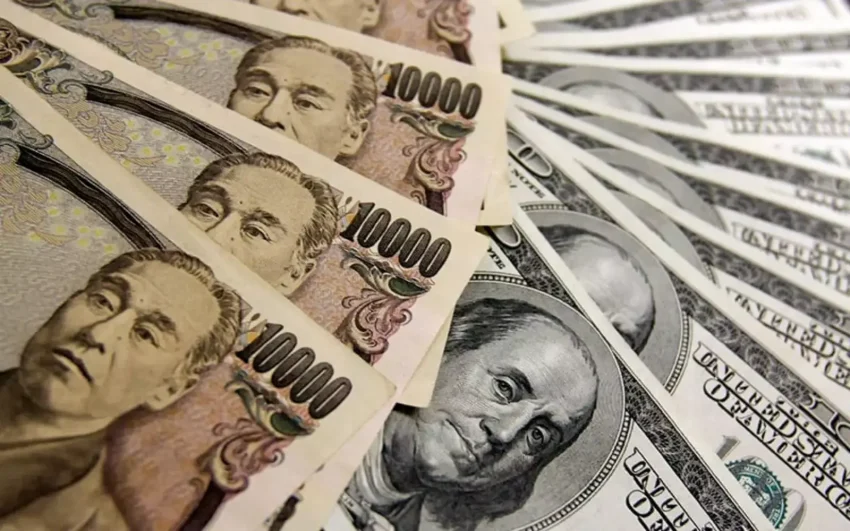
The US dollar edged as much as 0.1% higher against the yen to 155.29. (Reuters pic)
SINGAPORE: The yen slid to its weakest level in more than nine months in early Asian trading today as the US dollar benefited from receding expectations that the Federal Reserve (Fed) would cut interest rates at its policy meeting next month.
The US dollar edged as much as 0.1% higher against the yen to 155.29, the Japanese currency’s weakest level since Feb 4 this year, ahead of the release of delayed US payrolls data for September due on Thursday.
The recent moves in the yen prompted Japanese finance minister Satsuki Katayama to express concern at a regular news conference today.
“As we have recently been seeing one-sided, rapid moves in the foreign exchange market, we have been alarmed,” she said, in remarks reflecting broader worries about the negative economic implications of a weak yen.
Japanese Prime Minister Sanae Takaichi is due to meet Bank of Japan governor Kazuo Ueda later today.
A proponent of expansionary fiscal and monetary policy, Takaichi has filled seats in key government panels with advocates of big spending backed by low interest rates – policies that work to depreciate the yen’s value.
Fed funds futures are pricing an implied 43% probability of a 25-basis-point cut at the US central bank’s next meeting on Dec 10, down from a 62% chance a week ago and expectations that a cut was a near-certainty a month ago, according to the CME Group’s FedWatch tool.
The dollar index, a measure of the US currency against major rivals, was last up 0.2% at 99.545, snapping a four-day losing streak to reclaim a one-week high.
“The theory is, if there is a hold in December, it’s only a temporary halt,” analysts from ING wrote in a research report.
“Hard data releases ahead will have the final say, including some tolerance for weak employment data given the supply-side shocks,” analysts said.
Fed officials speaking yesterday highlighted risks to the US labour market.
US firms have begun talking more frequently about layoffs as they plan for weaker demand and possible productivity gains from artificial intelligence, Federal Reserve governor Christopher Waller said in remarks that continued to build the case for further rate cuts amid a broad policy dispute at the US central bank.
The US labour market is in a “sluggish” state with firms hesitant to hire amid broad shifts in economic policy and interest in how artificial intelligence might be a substitute for new hiring, Fed vice chair Philip Jefferson said yesterday.
Investor confidence took a hit overnight, pulling down all three major US stock indexes.
The yield on the US two-year Treasury bond was last down 0.2 basis point at 3.6039%, while the yield on the 10-year note was last up 0.6 basis point at 4.1366%.
The euro was trading flat at US$1.1594, around the weakest level of the week after its losing streak extended into a third day.
Sterling was at US$1.3149, also edging 0.1% lower for a third consecutive day.