From Boo Jia Cher
Kuala Lumpur never learns.
The RM1.7 billion New Pantai Expressway Extension (NPE 2) announced this week is a slap in the face for all who advocate for a better KL.
It is a relic of 1980s car-centric planning, dressed up as “modern infrastructure”. In 2025, when the world is talking about climate action, walkable cities, and robust public transport, our government and business elites are still celebrating another expressway as progress.
We have heard these promises before: “It will ease congestion”. “It will save 25 minutes”. “It will spur economic growth”.
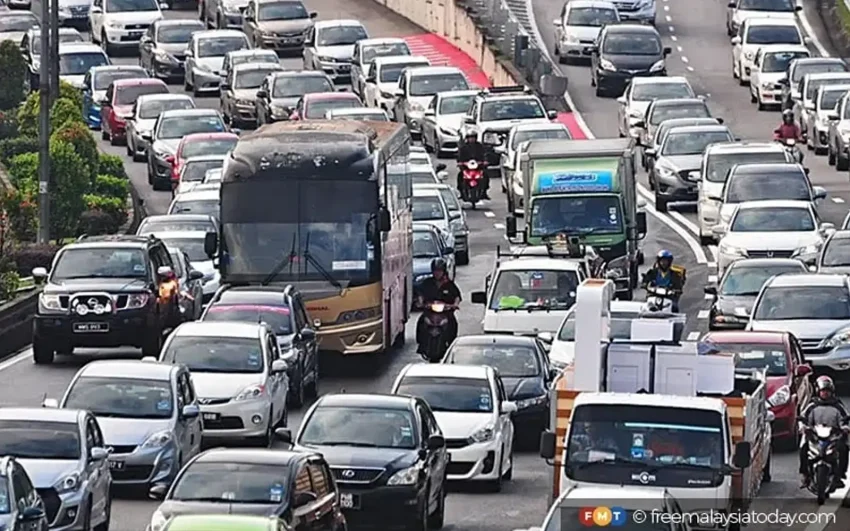
Anyone who has lived in this city long enough knows how this ends. Every new highway brings brief relief, then more traffic.
It is called induced demand: more roads mean more cars. Congestion returns, worse than before. And yet, our planners pretend not to know this.
It is not ignorance anymore. It is denial, plain incompetence, and a kowtowing to vested interests.
The government’s own National Transport Policy 2019–2030 and Kuala Lumpur Structure Plan 2040 promise a shift toward public transport and active mobility: better buses, safer walking and cycling, transit-oriented development.
Instead, we get yet another elevated highway slicing through congested neighbourhoods like Pantai Dalam and Bangsar.
How are we supposed to take “low-carbon Malaysia” seriously when our capital city keeps doubling down on car dependency?
We talk about net zero, yet design cities that make driving the only realistic way to live. We speak of livability, yet allow highways to cut through our city and spill smog and noise everywhere.
Meanwhile, those who don’t drive — the elderly, the poor, the young — are left stranded on broken sidewalks, navigating dangerous crossings, and relying on unreliable buses.
Each new expressway doesn’t just waste public money; it entrenches inequality. And as if that weren’t enough, these highways often become late-night racetracks for mat rempit, disturbing nearby residents.
Cities around the world are removing urban highways, like Seoul’s Cheonggyecheon, San Francisco’s Embarcadero, Paris’s Seine expressways, to reclaim space for people, not cars.
But in Kuala Lumpur, we remain obsessed with the mirage of “smooth traffic”, chasing it as if it were a solution rather than an illusion.
Across social media Malaysians, especially youth, are asking why our city keeps being sacrificed for cars. Roads lined with trees ripped apart for elevated highways.
Instead of real progress, we get politicians and businessmen posing at launch ceremonies for misguided highway projects. Every new expressway erases the possibility of a better, more livable city.
It tells future generations that cars matter more than clean air, safe streets, and vibrant public life.
The NPE 2 is not just a bad project; it is a confession of failure. A failure of imagination, leadership, and courage.
Kuala Lumpur does not need another highway. It needs leaders who understand that the age of highways is over.
That means coherent mobility policies, free from corporate profit-seeking, not the schizophrenic reality we have today: the transport ministry pushing public transit while the works ministry celebrates new highways.
Imagine reliable, frequent buses and MRT/LRT lines with seamless last-mile connections, like Seoul or Tokyo. Imagine streets safe and attractive for pedestrians and cyclists, with protected bike lanes and continuous sidewalks, as in Copenhagen or Bogotá.
Instead of nonsensical highways, Kuala Lumpur needs better bus lanes, expanded feeder networks to MRT stations, and pedestrian-friendly upgrades in high-traffic areas.
Small interventions — shading, lighting, safe crossings, traffic-calmed zones — make walking and cycling viable.
Encouraging affordable transit-oriented development around existing MRT and LRT stations would reduce car dependency and create compact, vibrant neighborhoods.
Kuala Lumpur must choose a better future. I wonder if it’s too late – are we travelling down a path of no return with our addiction to cars and highways?
I hope not. It is time to stop building a city for cars and start building a city that works for people.
Boo Jia Cher is an FMT reader.
The views expressed are those of the writer and do not necessarily reflect those of FMT.