[[{“value”:”
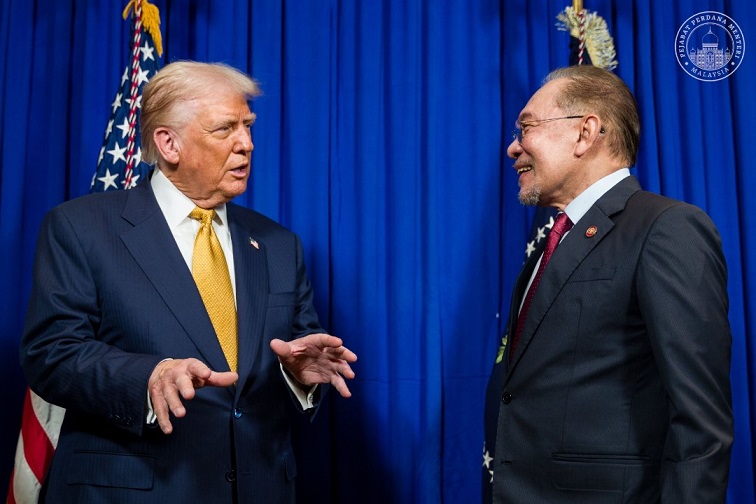
IN AN article, Financial Times trade editor Alan Beattie said the recent US-Malaysia trade agreement is an exercise in formalised coercion that risks turning Malaysia into a geoeconomic US vassal state.
Beattie’s takedown pulls no punches on the pact’s terms. “It contains a sweeping commitment that, if the US introduces any import restriction it considers necessary for its national or economic security, an exceedingly elastic concept, Malaysia will adopt or maintain a measure with equivalent restrictive effect, or agree to a timeline for implementation that is acceptable to both Parties,’” he writes, quoting the agreement’s language.
This, Beattie contends, effectively binds Malaysia to mirror American export controls and shun deals with US adversaries, code for China, without recourse. “Taken literally, this would turn Malaysia into a geoeconomic US vassal state,” he declares.
Worse still, the absence of an independent dispute settlement mechanism leaves Malaysia at the mercy of unilateral US enforcement. “There is no formal dispute settlement system with an independent panel, just the prospect of Trump acting as judge, jury and vengeful executioner,” Beattie laments, evoking echoes of imperial overreach.
Beattie reserves special scorn for the deal’s cheerleaders, including veterans of the Biden administration. “It’s disappointing to see them cheering on this exercise in neocolonial gunboat trade diplomacy as though it were analogous to the pursuit of co-operative alliance-based economic security they talked about when in power,” he says.
Malaysia, heavily reliant on US markets for semiconductors and electronics, its second-largest export destination, Beattie notes. Nimble economies like Malaysia, he writes, can stay nonaligned in the US-China trade cold war by swiftly shifting supply chains and embracing new tech.
But if the US were to Block Malaysia’s exports this would backfire on America’s own chip and tech sectors, and since Southeast Asia dwarfs the US as Malaysia’s export market, goods will likely reroute, he added.
The US dangles a volatile export market and dollar finance while China controls rare earths and green tech. Neither can be ditched.
As Trade Minister Zafrul Aziz quipped, Malaysia inked the US pact on Sunday and an ASEAN-China deal on Monday.
However, Alan Beattie slams superpower power-grabs as a retrograde step for global prosperity, but bets agile governments will dodge satellite status. “It’s an uneasy spot, yet far from powerless,” he said. —Nov 9, 2025
Main image: Borneo Post Online
The post US trade deal with Malaysia slammed as neocolonial coercion first appeared on Focus Malaysia.
“}]]