[[{“value”:”
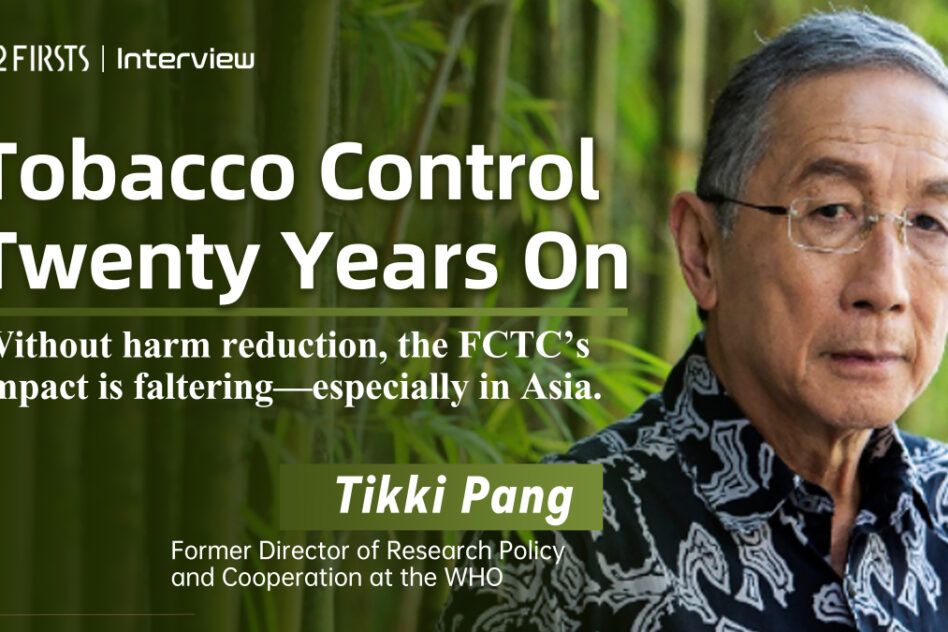
A PUBLIC health expert who once served as a director in the World Health Organization (WHO) has explained why a stronger focus on harm reduction is needed in global tobacco control.
Prof Tikki Pang, now part of Jakarta-based Centre for Healthcare Policy and Reform Studies recounted that 20 years ago, the WHO introduced the Framework Convention on Tobacco Control (FCTC) which has been ratified by 183 countries covering 90% of the global population.
The FCTC has led to a significant reduction in smoking prevalence around the world, particularly in rich and developed countries, thus helping to prevent or delay up to 24 million deaths over time.
“Since smoking causes 85% of lung cancers which in turn account for 20% of all cancer deaths worldwide, this represents a major achievement for the FCTC,” he had told the Asia Forum on Nicotine hosted by the Coalition of Asia Pacific Tobacco Harm Reduction Advocates (CAPHRA) which took place in August.
Despite this early success, Pang revealed that there were still eight million deaths annually linked to smoking with four out of five of these deaths occurring in lower-middle-income countries.
He offered two reasons for this, namely (i) the relatively slow implementation of FCTC articles by signatory countries; and (ii) the non-recognition of less harmful and alternative tobacco products as a means to curb smoking.
Limited adoption of THR
This was despite “overwhelming evidence” of the safety, efficacy and cost-effectiveness of these (alternative) products used by some 130 million people around the world.
“Nevertheless, global health authorities have adopted a very strong anti-tobacco harm reduction (THR) stance,” observed Pang.
“(They) actually state that these products are as harmful as combustible cigarettes and call on their member states to ban them and actually give awards to countries which have done so.”
Pang went on to describe this resistance as the “elephant in the room” and a “key barrier” to the wider adoption of THR.
This was because many lower and lower-middle-income countries looked to the WHO for guidance in terms of setting their own policies.
On the way forward, Pang mooted the establishment of independent, evidence-driven platforms involving key stakeholders to improve dialogue and coordination.
Such platforms could exist outside the FCTC structure and bring stakeholders, including producers, consumers and investors together to achieve five goals.
Pang’s view on THR has been echoed by the Malaysian Society of Harm Reduction (MSHR) chairwoman Prof Dr Sharifa Ezat Wan Puteh.
The trained medical doctor from Universiti Kebangsaan Malaysia (UKM) contended that there was actually nothing new” about harm reduction as it has been used in HIV prevention and drug therapy.
Prof Dr Sharifa Ezat Wan Puteh
However, she noted this was not the case for tobacco. “A lot of Asian countries are also members of the FCTC, so they follow what the WHO says. Anything with tobacco plus nicotine is seen as something harmful.”
In Dr Sharifa Ezat’s reckoning, the way forward would be for tobacco harm reduction to be recognised as part of comprehensive public health strategies though she admitted this was unlikely.
Ultimately, both experts agreed that re-framing tobacco harm reduction as part of broader public health strategies could open the door to more inclusive and effective policies in the years ahead. – Oct 30, 2025
Main image credit: 2Firsts
The post Ex-WHO director: Harm reduction must be at the heart of tobacco control first appeared on Focus Malaysia.
“}]]